Picking between water sports can feel overwhelming when you’re new to the sea. Start with one that suits your fitness and local conditions, learn the safety basics first, then build from there.
| Key fact | Value |
|---|---|
| Time to watch the water before each session | At least 10 minutes |
| Typical rip current width | 10 to 30 meters |
| Rip current top speed | Up to 2.5 meters per second (about 5 mph) |
| Cold water shock range | Typically below 15 degrees Celsius (59 degrees Fahrenheit) |
| Wait after heavy rainfall before swimming | 48 hours |
These figures come from SwimPass’s open water safety guide and Rapture Surfcamps’ surf safety lesson. Conditions and guidance can change, so check the source before you rely on them.
How to choose your first water sport
Start by looking at the water near you before you think about a dream destination. A sheltered lake, a surf beach and a windy estuary each favour different activities, so the setting narrows your choices before you spend anything.
Before you buy anything, work through these questions:
- What kind of water can you reach? Waves, flat water and steady wind each suit different sports.
- How cold does it get? Water temperature decides how much you spend on thermal kit and how long a session can last.
- How strong is your swimming? Every water sport assumes you can look after yourself if you end up in the water.
- Is there coaching nearby? A qualified instructor shortens the early, frustrating weeks and builds good habits.
- How will you carry and store the gear? Boards, kites and sails all take space, and that matters more than most beginners expect.
Swimming ability deserves honesty. One surf retailer’s blog advises that if you are not already a competent swimmer, taking lessons so that you can swim at least 500m should be enough to get you back to shore if you suddenly need to, as the Wild Atlantic Surf Co safety post puts it. Treat that as a floor, not a target.
Wave riding is the heart of this site, and our guide to surfing is the natural next step if the ocean is your goal. If you are building a trip around the sport, the surf travel pages are a good place to start when you plan time on the coast.
Whichever sport you pick, expect to be a beginner for a while. Progress in the water is slow and uneven, and that is normal. Short, regular sessions in conditions you can handle beat one heroic day in water that is too big for you.
Board sports from the shore: surfing, bodyboarding, skimboarding and SUP
Board sports share a lot of skills: reading the water, balancing, falling safely and getting back to your board. That means time spent on one often helps with another. They differ in where they happen and how much space and equipment they need.
Surfing means paddling out and standing up on a wave, and it asks for patience as much as fitness. Wave size, tide and wind all change the way a beach breaks. Learning to read those factors is a long project, and it starts with the safety habits later in this guide.
Riding waves lying down is a gentler way to meet the surf for many people. Our guide to bodyboarding for beginners explains the kit and the basic technique. It also shows how a small board can still teach you a great deal about wave timing.
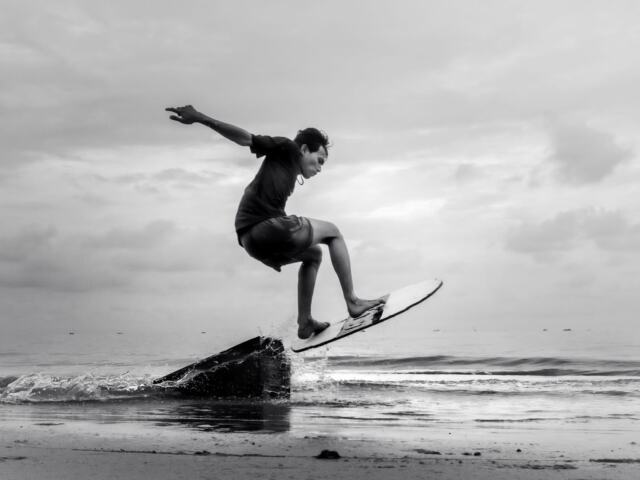
If you like the idea of running into the shallows and gliding across the sand on a thin board, skimboarding is the sport to try. Our guide to skimboarding for beginners covers the basics. It is mostly a shorebreak activity, so the hazards of shallow water and hard sand apply.
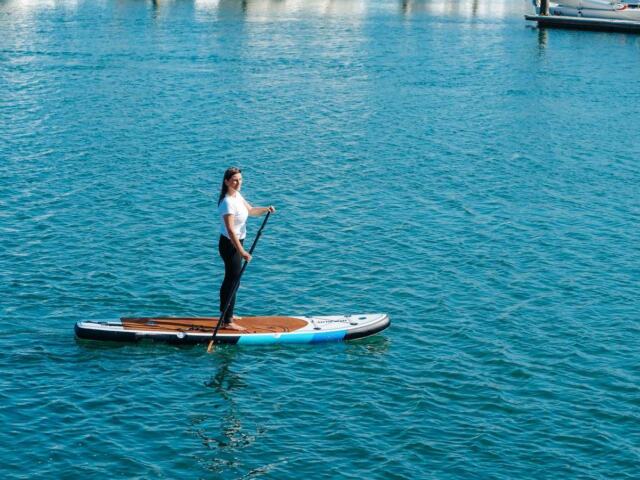
Stand up paddle boarding is the most flexible of the group, because you can use it on a calm lake, a slow river or a quiet bay as well as on small waves. Our guide to stand up paddle boarding for beginners walks through boards, paddles and technique. Flat water is a forgiving place to learn balance, but wind and current can still carry you further than you plan.
Here is a quick way to compare the four, based on what each asks of you:
- Surfing: suits beaches and reefs with breaking waves, and the first skills are paddling, wave selection and etiquette.
- Bodyboarding: also suits beaches with breaking waves, and the first skills are wave timing and positioning.
- Skimboarding: suits shallow, wet sand at the shoreline, and the first skills are the run, the drop and the landing.
- Stand up paddle boarding: suits lakes, rivers, bays and small waves, and the first skills are balance and efficient paddling.
None of these is a shortcut around the sea’s hazards. A calm lake still has cold water, and a small wave can still hold a strong current. Pick the setting that matches your skill, not the one that looks best in photos.
Wind-powered sports: kitesurfing and windsurfing
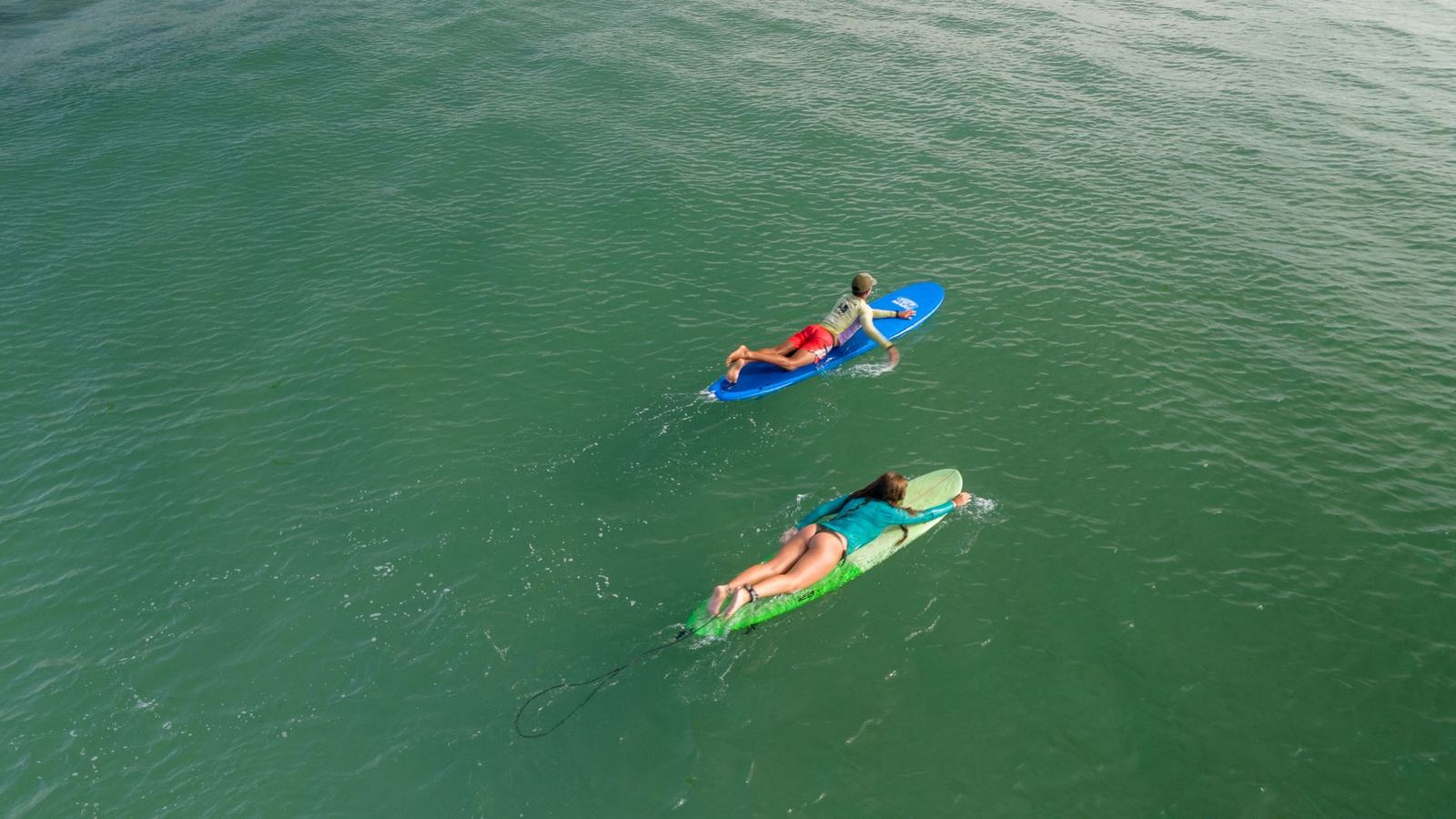
Kitesurfing and windsurfing both use the wind for power, which makes the forecast part of the sport itself. The spot, the direction of the wind and the other water users around you all shape whether a session is sensible. A day that suits one rider can be unsafe for another.
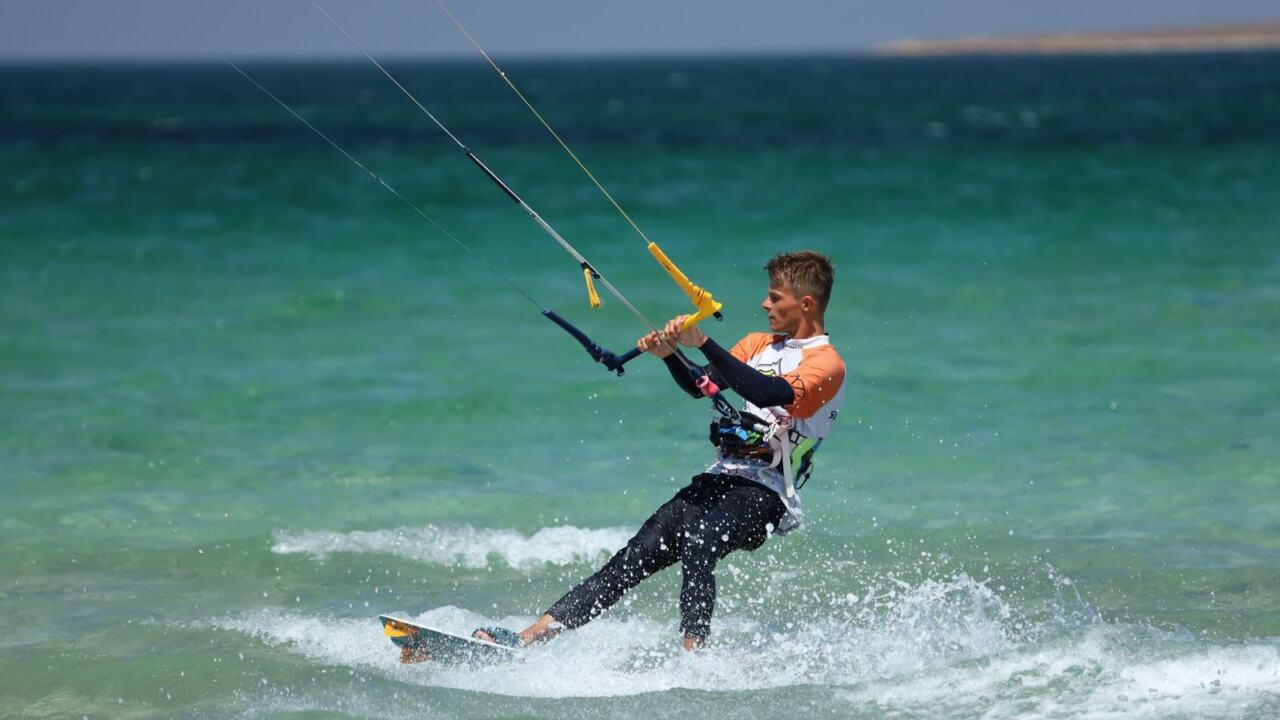
Our guide to kitesurfing for beginners explains the equipment and why early learning is best done with qualified instruction. Controlling a kite is a skill in its own right, and it is separate from riding a board. Plenty of the early work happens on the beach, before you ever get wet.
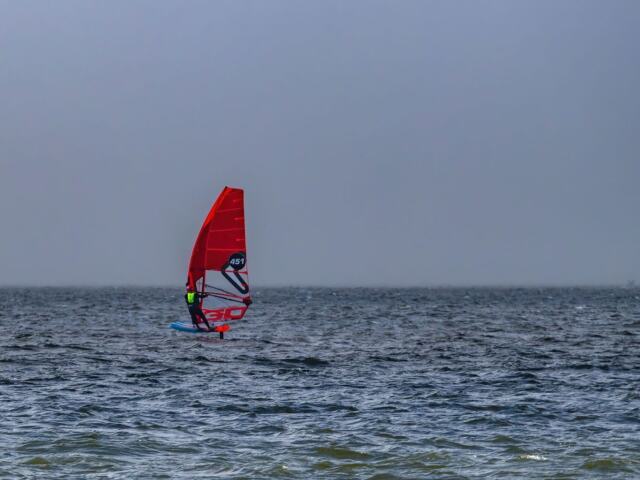
The classic alternative is the board and sail. Our guide to windsurfing for beginners covers rigging, stance and how to turn the board, along with the common early mistakes. Both sports reward people who enjoy the technical side of equipment.
Because wind can push you away from where you launched, plan your exit before you launch. Think about these points:
- Wind direction relative to the shore: onshore wind tends to push you back towards the beach, while offshore wind pushes you out.
- Your launch and landing area and whether it is clear of people, rocks and structures.
- Other water users, such as swimmers, surfers and boats, who may not expect you.
- A fallback plan if the wind drops or the equipment fails and you need to get yourself ashore.
As with every sport here, a beginner’s session is shaped by the weakest link: your skill, your kit or the forecast. If any of these is in doubt, postpone. The water will still be there tomorrow.
Staying warm: wetsuits and cold water
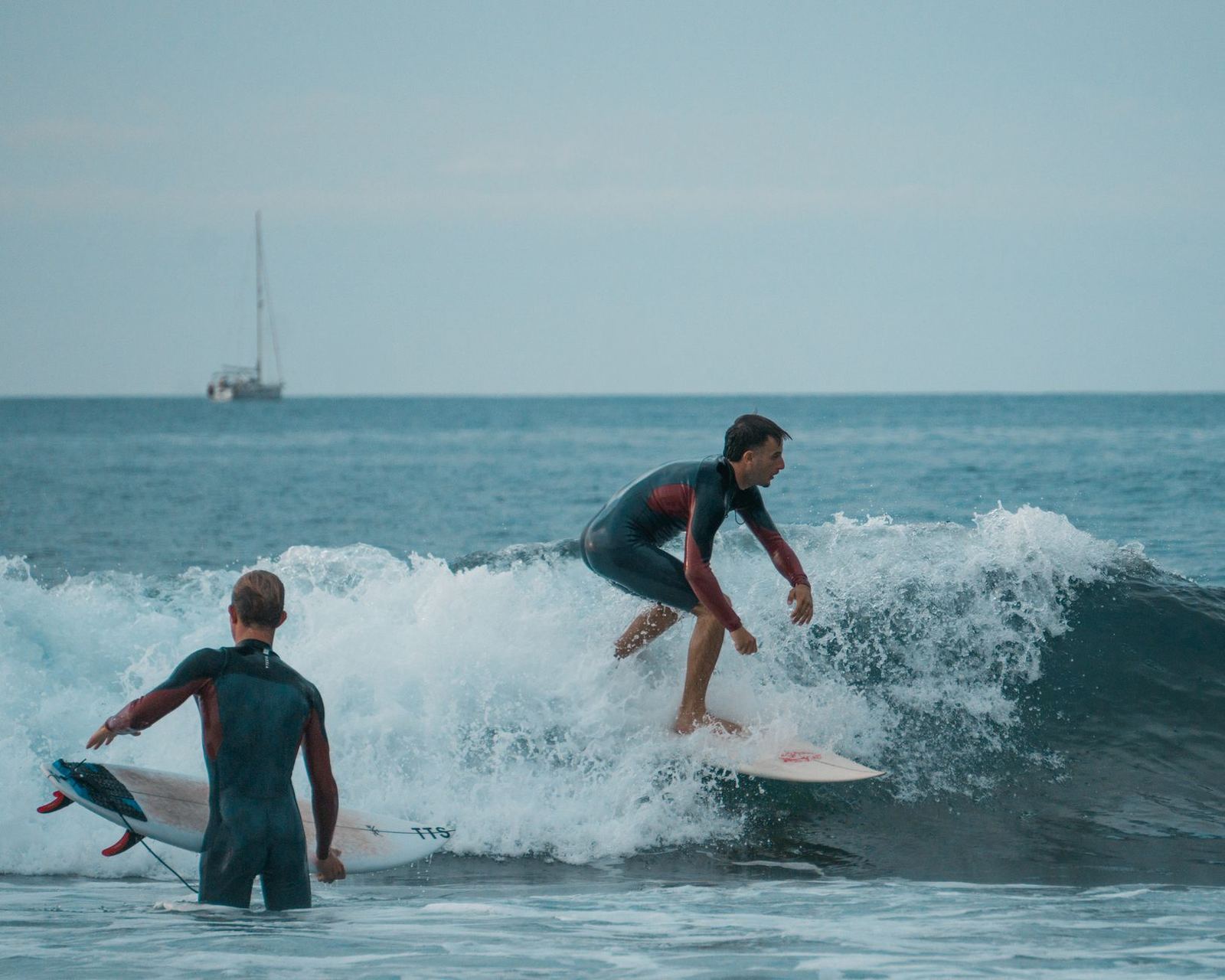
Cold limits sessions and affects safety, so thermal protection is the first piece of kit most beginners should think about. Our guide on how to choose a wetsuit covers fit and style, because a suit that leaks or restricts your arms will spoil any session. The wetsuit thickness guide then helps you match the neoprene to the water temperature where you plan to go.
Cold water is more than uncomfortable. According to SwimPass, cold water shock is the body’s involuntary response to sudden immersion in cold water, typically below 15 degrees Celsius (59 degrees Fahrenheit). Its guide describes the first stage as a gasp reflex in the first 0 to 3 minutes, with rapid, uncontrolled breathing, as set out in the SwimPass swim safety page.
That is why entering cold water slowly matters. If you are not used to it, you can build tolerance gradually. The same guide suggests starting with short dips of one to two minutes and adding 30 seconds each session, and never jumping or diving into cold water, as the SwimPass advice explains.
For cold conditions, the same guide suggests considering a wetsuit, neoprene gloves and booties. Other items can help depending on your sport and spot:
- Rash vest or thermal layer for milder water or extra warmth under a suit.
- Boots to protect your feet on reef or rocks, as well as keeping them warm.
- A changing robe or towel so you can warm up quickly after you leave the water.
- Sun protection, because heat and glare are risks too, even on a cool day.
Look after the rest of your gear as well. A board with dings or cracks can let in water and fail at a bad moment, so check it before you go and repair damage properly. Equipment you trust lets you concentrate on the water.
Water safety basics before every session
Safety is not a separate topic from the fun. It is what keeps you able to come back next weekend. The routine below applies to every sport in this guide, from the first wobbly paddle to your hundredth session.
Rapture Surfcamps advises spending a minimum of 10 minutes observing the ocean before every session, as its surf safety lesson explains. It adds that you should watch for at least three full sets to understand the wave size range. That habit is the single most useful one a beginner can adopt.
Use that time on the beach to work through this checklist:
- Read the conditions: check wave size, wind, tide and the crowd, and look for hazards such as rocks, piers and jetties.
- Tell someone your plan: share where you are going and when you expect to be back.
- Know your entry and exit points: in tidal areas, confirm your exit will still be accessible when you finish.
- Be honest about your ability: if there is any doubt, do not go out. Come back when conditions change, or find a different spot.
- Bring suitable gear: a visible swim cap or a tow float if you swim, the right wetsuit if it is cold, and a whistle for emergencies.
- Never go alone: a buddy, a group or a lifeguard in sight turns a dangerous situation into a manageable one.
Several of these points echo the SwimPass pre-swim checklist, which also warns that rising tides can cut off beach access. Paddlers and swimmers in tidal areas should take that seriously. Confirm the plan before you step in.
Rip currents
Rip currents are the hazard every coastal beginner needs to understand. SwimPass describes them as the leading cause of lifeguard rescues on surf beaches worldwide, and says one can flow at speeds of up to 2.5 meters per second (about 5 mph), per its open water safety guide. Rapture Surfcamps likewise says they account for the majority of surf-related rescues and drownings worldwide, in its safety lesson.
The danger is exhaustion, not being pulled under. Spot a rip by looking for:
- A channel of churning, choppy water.
- A change in water colour, often darker or murkier.
- Foam or debris moving steadily out to sea.
- A gap in the line of breaking waves.
If you are caught in one, stay calm, do not swim straight against it and move across the flow. Most rip currents are only 10 to 30 meters wide, according to SwimPass, so swimming parallel to the shore usually gets you out of the pull. Our full guide on how to escape a rip current goes through the steps in more detail.
If you cannot swim out, SwimPass says to float on your back and raise an arm to signal for help. Preparation is the best defence: identify the rip before you enter, and choose another spot if you are unsure. Lifeguard flags and local advice are worth following.
Water quality and the body
Water quality is easy to overlook. Heavy rain can overwhelm sewage systems and wash agricultural runoff and urban pollutants into waterways, so SwimPass advises you to avoid swimming for 48 hours after heavy rainfall in its safety guide. If you are paddling on a river or near a river mouth, this is worth remembering.
Look after your body before you go. The Wild Atlantic Surf Co post recommends stretching and warming up, and not eating for an hour: it says don’t eat within an hour before hitting the water, to avoid cramps or stiffness leading to injury, in its pre-surf safety tips. The same post says surfing under the influence is reckless because it affects your senses and judgement.
Marine life is a smaller risk than most beginners fear, but it is worth a look at local reports. Jellyfish are the most common marine hazard for swimmers, according to the SwimPass guide. Water shoes or reef boots help in shallow, sandy or rocky areas.
Building skills safely over time
Once the basics are in place, progress comes from repetition in conditions that stretch you only a little. Repeating a familiar spot lets you notice how tide, wind and swell change it. That knowledge is worth more than any single piece of gear.
A simple routine helps you improve without taking risks:
- Keep a short log of conditions, what you tried and what went well.
- Take lessons or coaching when you reach a plateau, rather than guessing at technique.
- Train outside the water with swimming, mobility and stamina work that supports your sport.
- Change one thing at a time, such as a bigger day or a new spot, and not both together.
Be generous with others in the water. Learn the etiquette of your sport, give way where it is expected and keep clear of swimmers. Good manners are also a safety measure, because predictable people are easier to avoid.
Finally, keep your motivation realistic. Some days the conditions will say no, and the right decision is to walk away and try again. Experienced water users make that call without regret.
Frequently asked questions
Which water sport is best for a complete beginner?
Show answer
No single sport is best for everyone. Choose by the water you can reach, the temperature, your swimming ability and whether you can find coaching nearby, then start with lessons.
Do I need to be a strong swimmer?
Show answer
You should be comfortable in the water. The Wild Atlantic Surf Co post suggests lessons if you cannot yet swim at least 500m, which it says should be enough to get you back to shore if needed; read its safety tips for context.
What should I do if I am caught in a rip current?
Show answer
Stay calm and do not fight it. Rapture Surfcamps says rips are typically 10 to 30 meters wide and advises paddling parallel to the beach until you are out of the flow, then heading back in, per its safety lesson.
Can I go in the water after heavy rain?
Show answer
SwimPass advises avoiding swimming for 48 hours after heavy rainfall, because runoff and sewage overflows can contaminate the water. Check the SwimPass guide and any official water-quality advisory for your spot.
Why does cold water matter even in summer?
Show answer
Cold water shock is typically a risk below 15 degrees Celsius (59 degrees Fahrenheit), according to SwimPass. Many seas stay cold well into the warm months, so check the water temperature and dress for it.