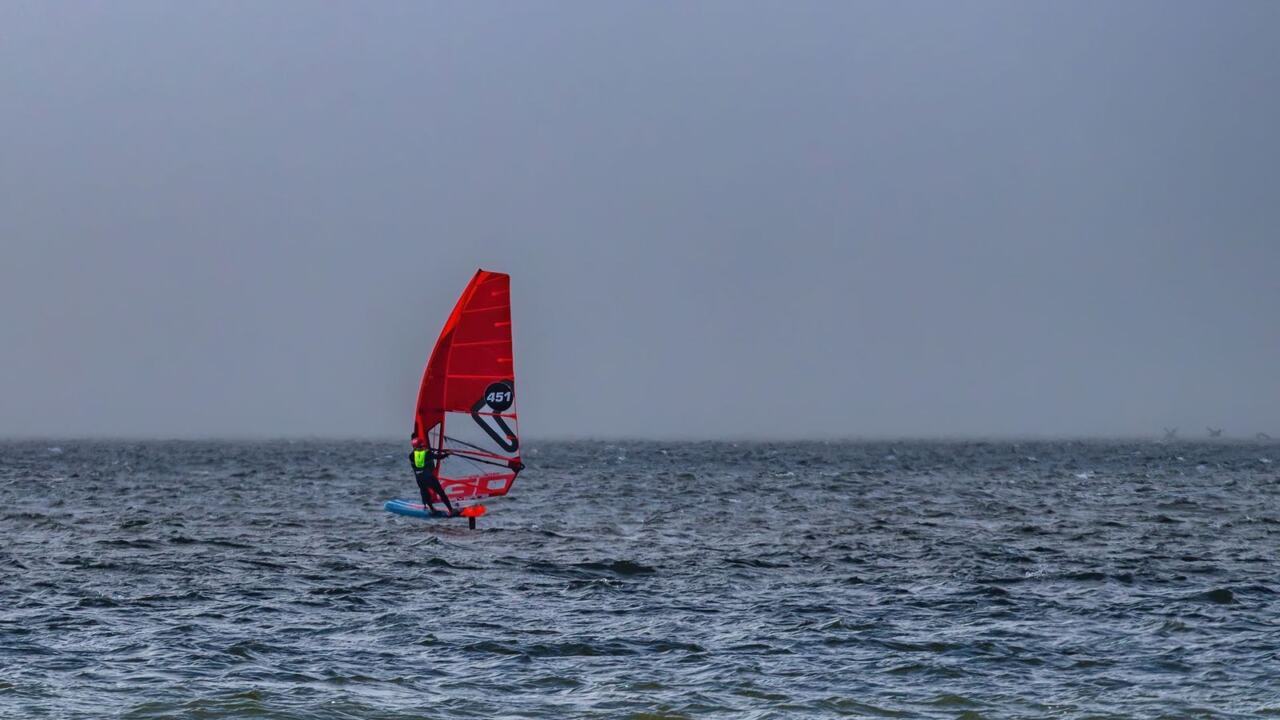
Worried you’ll spend hours falling off the board? Windsurfing for beginners is easier with a surf school lesson, a big stable board and a small sail in steady, onshore wind.
This guide is part of our wider look at water sports, so you can compare windsurfing with other ways onto the water.
| Item | Value |
|---|---|
| Typical beginner board volume | 160 to 220 litres |
| Typical beginner sail size | 3 to 5 square metres |
| Board volume rule of thumb | About 100 litres more than your body weight in kilograms |
| Equipment hire | 20 to 50 euros per day |
| Buying your own complete set | 1500 to 2000 euros |
| Wind for a first try | 12-15 knots, with calm seas |
The figures come from surf Magazin’s beginner questions and answers from August 2022 and Discover Boating’s windsurfing guide. Prices, sizes and conditions can change, so check the source before you rely on them.
Why a surf school beats going it alone
The first port of call for beginners is a surf school, according to surf Magazin’s 2022 guide. It does not matter whether the school is a small one at a local lake or a large centre at a holiday destination, as long as it has experienced instructors and the right equipment.
Instructors help you avoid typical beginner mistakes, which speeds up progress and keeps you motivated. Teaching yourself can satisfy first curiosity, but the same guide says the easiest and quickest way to learn is in a surf school.
In the UK, a Boards windsurfing guide from April 2014 recommends lessons at an RYA accredited centre and describes the Royal Yachting Association as the governing body of windsurfing there. It says a starter course gets you up and sailing in as little as eight hours, and that taster sessions started from £25.00 per hour at that time. Ask any school for its current rates.
Many courses end with a windsurfing licence. The 2022 guide says it allows you to hire equipment at many stations and is required to surf on some waters, so check what the waters near you ask for.
Windsurfing gear and costs: what to bring, rent or buy
For a course you need very little. surf Magazin says a swimsuit, a towel and some sun cream are enough, because students are provided with everything else.
A Boards guide suggests a few extras in your bag:
- Something to eat and drink
- A warm coat for after the session
- Wetsuit boots or old trainers, if you have them
A wetsuit is always advisable, even in very warm, tropical areas, because it protects you from bumps, scrapes and cooling down. Most centres and clubs lend one, so buying can wait until you know you will stick with it.
The parts of a windsurfer
- Board: has a fin at the rear end for directional stability, and beginner boards often add a folding centreboard.
- Rig: the sail, mast and boom together.
- Mast foot: a movable rubber joint that connects the rig to the board.
- Uphaul: an elasticated piece of material you use to pull the sail up.
Your first set-up will probably be a big board with a small sail, because more volume means more float and stability. Beginner sails usually have around 3 to 5 square metres, and boards 160 to 220 litres.
The rule of thumb from the same guide is that beginner board volume should be about 100 litres more than your body weight in kilograms. Children should start on slightly smaller boards so they can give steering impulses more easily.
What does windsurfing cost?
The wind is free, and hire usually costs between 20 and 50 euros per day, getting cheaper the longer you rent, according to the 2022 surf Magazin guide. Hire also lets you swap to the right sizes as you improve.
Buying a complete set means budgeting around 1500 to 2000 euros, according to surf Magazin. Used kit is cheaper but takes more effort to put together.
In a separate UK example, the April 2014 Boards article said a used board and sail could cost a couple of hundred pounds.
Be wary of old kit. The 2022 guide strongly advises against supposedly cheap boards and sails that have sat in a garage for years, because outdated equipment is dangerous and heavy.
Picking the right spot and wind
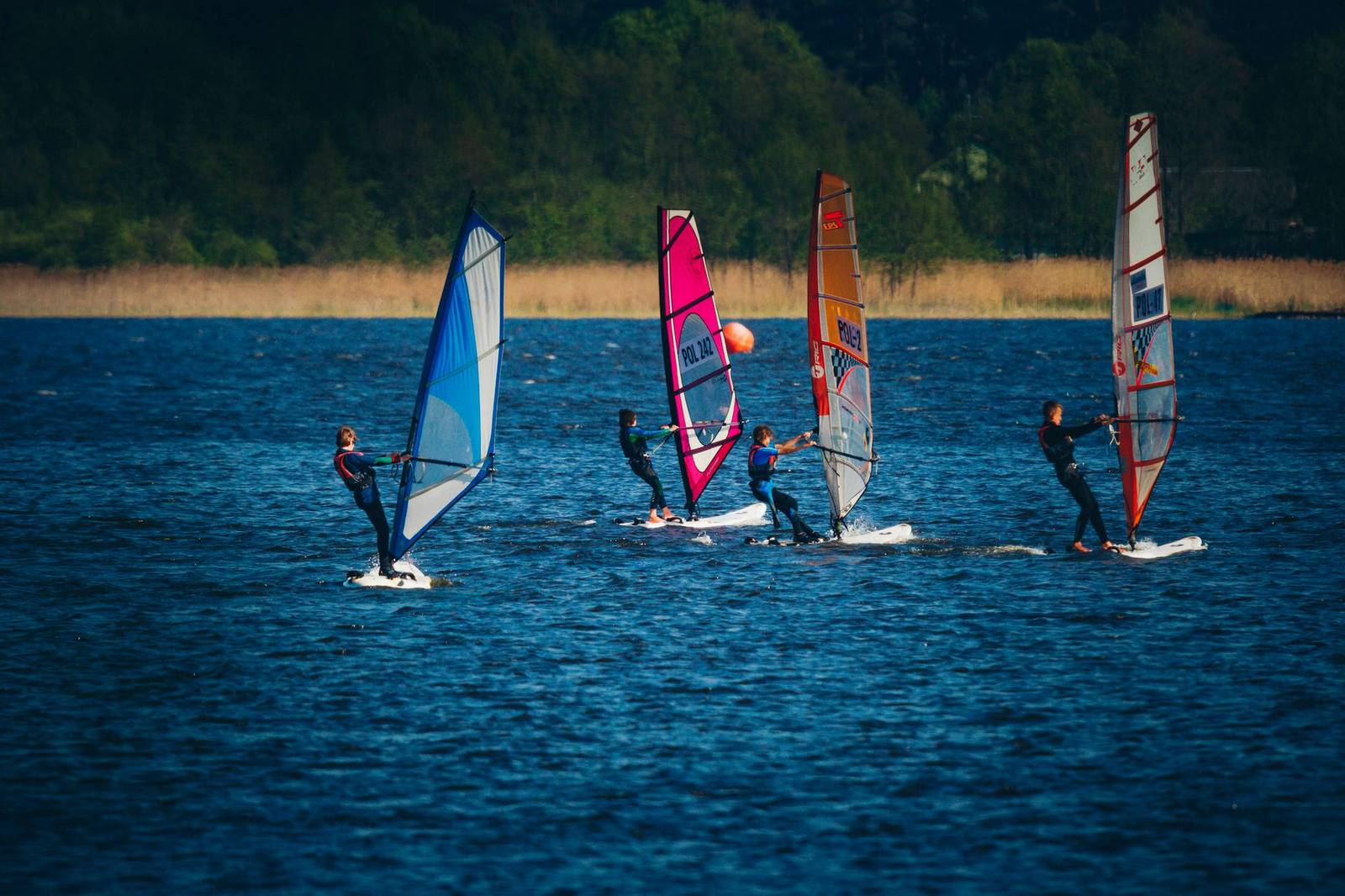
The best beginner spots have a sandy bottom with a large standing area and a steady, not too strong wind, according to surf Magazin. Ideally it is a bay that offers protection from waves.
Wind direction matters as much as strength. Wind should blow onshore so you do not drift off, while offshore winds are much more dangerous because they push you away from the shore. They are also usually gustier and more unpredictable.
For a first try, Discover Boating suggests waiting for calm seas and winds of 12-15 knots. It also says it is easiest to sail with the wind blowing alongside the shore, and that cold water tires your body out quicker.
A quick checklist before you go out:
- Sandy bottom and a large area where you can stand
- Onshore wind, or wind blowing alongside the shore
- Steady, moderate wind rather than gusts
- No rain, high winds or very frigid temperatures
Your first session on the water
Practise on dry land first. Discover Boating says this lets you get comfortable standing on the board, handling the gear and steering before you enter the water.
On the water, the sequence in that guide goes like this:
- Kneel on the board, grab the uphaul line and, when you feel steady, slowly stand up.
- Raise the sail with the uphaul, keeping your back straight and holding the mast with both hands.
- Steer by tilting the mast and your body together, leaning one way to turn in that direction.
- Grab the boom near the mast, lean back to keep the sail upright, and use your back hand for speed: pull to go faster, release to slow down.
The first start beginners learn is the sheet start, where you pull the sail out of the water with a rope while standing on the board. On larger boards that are not planing, surf Magazin says you steer by tilting the sail backwards or forwards.
Turning and going upwind
To get back to your starting point you either tack or jibe. When jibing, the board turns out of the wind, and when tacking it goes through the wind, with beginners usually learning the tack first.
You cannot ride directly into the wind, but you can ride at a certain angle towards it. To reach a point upwind you cross, which means sailing an upwind course several times and tacking in between.
So is it hard? Yes and no, says surf Magazin: balance and sail alignment can seem complicated at first, and gusty wind or choppy water can frustrate you. With the right equipment and good instructors those hurdles fade quickly.
How do you stay safe while learning?
The first safety question is asked on land: are the spot and conditions suitable for your ability? The 2022 guide calls windsurfing a very safe sport if you follow a few simple rules, and says that if you fall off the board you usually just get wet.
- Hold the boom with at least one hand and stretch your arms when you fall, because the biggest danger is getting the rig on your head.
- Wear a long wetsuit, which protects from the cold and prevents abrasions.
- Consider a buoyancy waistcoat for body protection and a surf helmet for your head.
- Stay where you can stand, so you can walk back to the beach if in doubt.
- Avoid offshore wind while you are learning.
Your next steps
A simple route into windsurfing for beginners looks like this:
- Find a surf school and try a short taster or starter course.
- Hire kit at first and let the school match board and sail to your size.
- Choose sheltered spots with a standing area and steady onshore wind.
- Buy your own gear only once you know you want to continue.
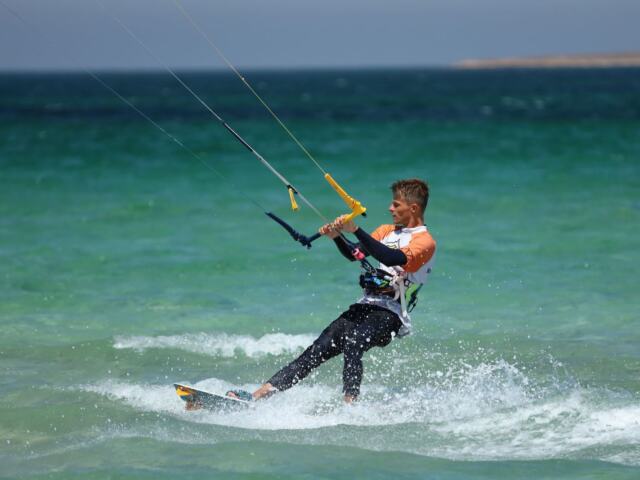
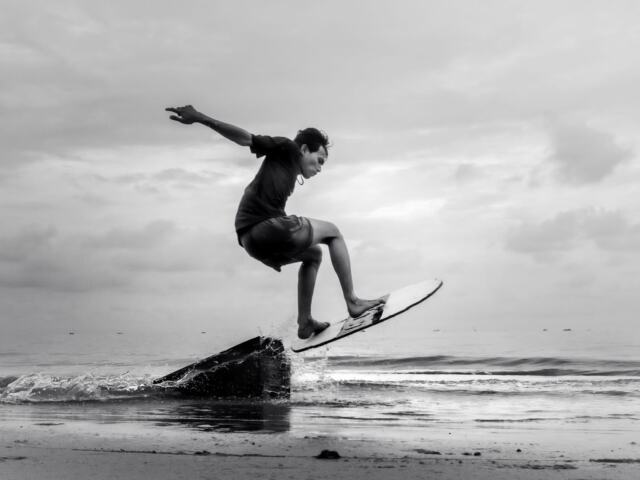
If wind-powered boards appeal to you but you want a different feel, you can read about kitesurfing for beginners next. Curious about other ways to enjoy the shoreline? Our guide to skimboarding for beginners is a good place to continue.
Frequently asked questions
Is windsurfing difficult?
Show answer
Yes and no. Balance and sail alignment feel complicated in the first attempts, but good instructors and suitable equipment make the hurdles disappear quickly.
Can I teach myself to windsurf?
Show answer
You can try it out to satisfy your curiosity. If you have some ambition, surf Magazin says the easiest and quickest way to learn is in a surf school.
How much board volume do I need?
Show answer
A rule of thumb is about 100 litres more than your body weight in kilograms. Beginner boards are typically 160 to 220 litres, according to the same guide.
Do I need to buy my own gear?
Show answer
No. Surf schools provide the equipment, and hire usually costs between 20 and 50 euros per day, as reported in the August 2022 guide.
Can you windsurf straight into the wind?
Show answer
No. You can ride at a certain angle towards the wind and cross by sailing upwind courses with tacks in between.