Planning surfing in Sardinia? You’ll get the best waves from autumn to spring, when the Mistral stirs up swell, mostly on the west coast around Capo Mannu. Summer is the quiet season.
This guide sits inside our wider coverage of surf travel, so use it alongside your other trip planning.
| Item | Value |
|---|---|
| Best surf seasons (one local guide) | September to November and March to May |
| Capo Mannu wave height | Up to 4 metres |
| Water temperature (one travel guide) | 10°C in winter to 20°C in summer |
| Tide range | 20 cm to 40 cm |
| Coastline | Almost two thousand kilometres |
These figures come from Blu Alghero’s surf spot guide and IKSURFMAG’s north Sardinia guide. They can change, so check the source before you rely on them.
When is the best season for surfing in Sardinia?
The sources do not fully agree, which is worth knowing before you book flights. One local guide calls autumn and spring the best seasons, thanks to the Mistral wind and frequent storms.
A watersports app guide lists October to March as the best months for surfing. A travel blog says winter is by far the best season for waves, but that other seasons can work when the strong Mistral sweeps the island.
What the sources share is the Mistral. The local guide credits the Mistral wind and frequent storms with creating ideal surfing conditions, and the travel blog ties good surf outside winter to a strong Mistral.
Here is how the seasons break down, based on those sources:
- Autumn: the Mistral and storms return, and a local guide rates September to November among the best surf months. The same wind guide says the wind returns “with a vengeance” in autumn (source).
- Winter: the highest winds and waves, but January and February demand thick neoprene, according to the kite and windsurf guide.
- Spring: a local guide puts March to May among the best windows (source).
- Summer: less wind and fewer waves, but the travel blog notes you can swim and sunbathe on calm days and surf on the windy ones.
Wind, swell and water temperature
Surfing in Sardinia is driven by wind more than by classic ocean swell. The watersports app guide describes a north-west Mistral of 20-35 knots, plus the Scirocco from the south-east in autumn.
The same guide says the west coast picks up Atlantic swell refracting into the Med. That is why the west coast gets most of the attention from surfers.
The island is windy overall. IKSURFMAG describes Sardinia as a windy island, especially from September to June, with July and August less likely to be windy. It also reports a very small tide range, so you rarely need to plan around tides.
What to wear
Sources disagree on water temperature. One guide gives 10°C in winter to 20°C in summer, while another gives 14°C in winter and 25°C in summer. When figures differ, pack for the colder number.
The app guide suggests this kit by season:
- A 4/3mm wetsuit for winter.
- A 3/2mm suit in spring and autumn.
- Boardshorts in summer.
- Reef booties for rocky entries.
Where the waves are: west, north and south
The west coast is the headline. The app guide calls Capo Mannu a powerful right-hand reef break that works on north-west to west swells.
The local guide adds that the bay is well exposed to the Mistral and can offer waves of up to 4 metres, but that the rocky bottom and strong currents make it a spot for experienced surfers (source). It also says the place is very crowded.
On the north coast, Porto Ferro near Alghero and the Isola Rossa and La Marinedda area get attention. The travel blog says Isola Rossa and La Marinedda are good surfing spots whenever the Mistral blows.
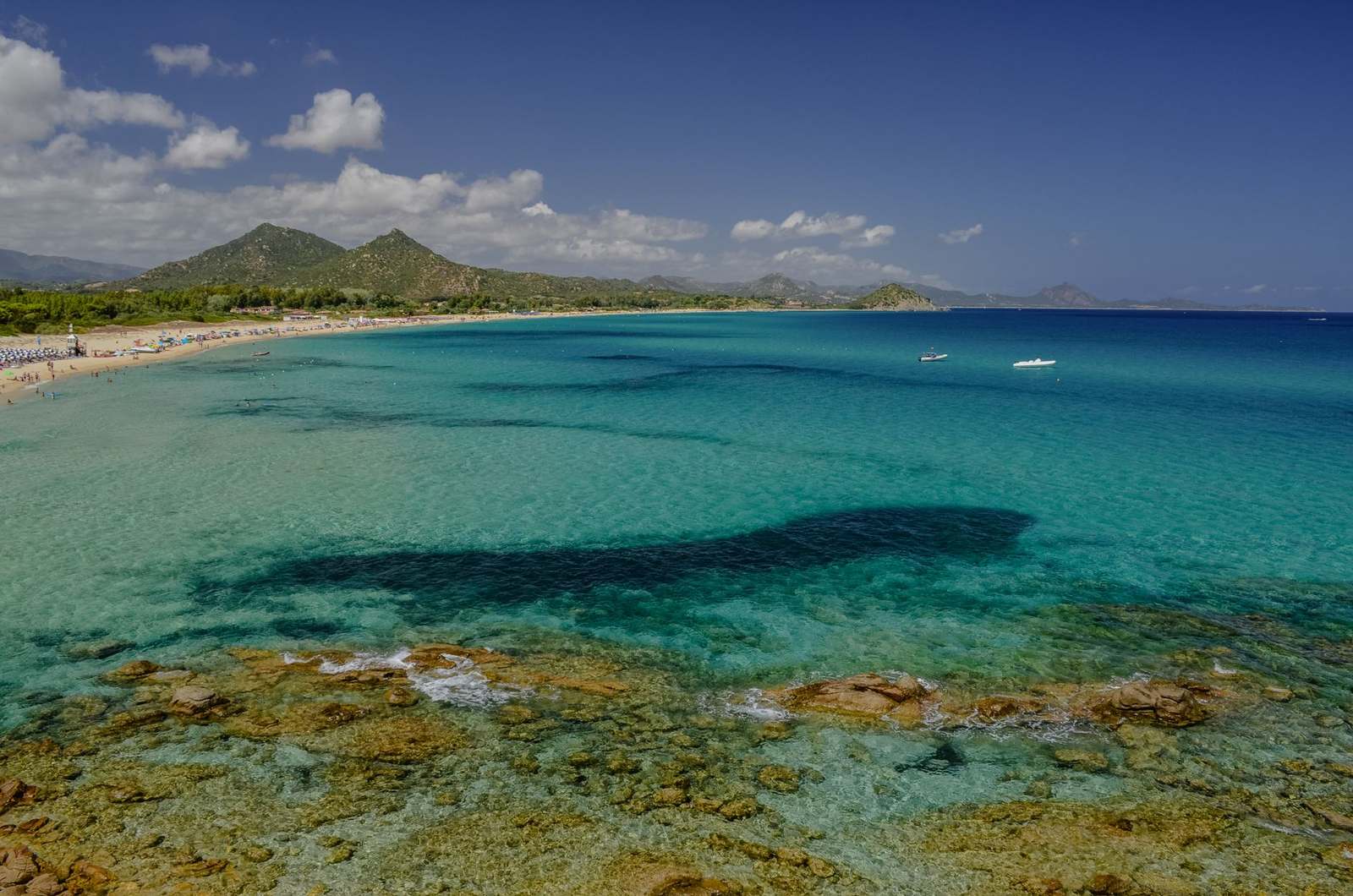
In the south, Chia has fast waves and strong north-east winds and suits the most experienced, according to the local guide. The same guide describes Poetto at Cagliari as a spot with waves that are not particularly high but very abundant.
Wind-sport hubs are a different story. A windsurf spot guide says westerly winds at Porto Pollo are amplified by a jet effect in the Strait of Bonifacio. That makes it a wind destination first, not a surf one.
Matching a spot to your level
Choose your break by experience, not by reputation. The local guide and the app guide point to a clear split:
- Beginners: Porto Ferro, with a sandy seabed and waves coming from right and left, Poetto, and Buggerru, where the beaches have a sandy bottom.
- Intermediates: the beach breaks at Putzu Idu near Capo Mannu.
- Experienced surfers: Capo Mannu and Chia.
Porto Ferro is about 20 km north of Alghero and is described as not very crowded from September through May, with a surf school on site (source). Check the school’s own details directly, since this site does not take bookings.
If you are still choosing a country, compare the best surf spots in Italy with other options. If you are building basic skills first, read about surfing in Portugal for beginners as a point of comparison.
Getting there and getting around
Sardinia is big and spread out. A kite and windsurf guide notes it is 270km north to south with 1,800 coastal kilometres, with a major drive, expensive ferries and long island roads, so it does not suit a short trip.
Fly into Olbia or Alghero for the north. For the Badesi area, IKSURFMAG lists transfers of 1.5 hours from Olbia and 1 hour from Alghero by car.
Ferries are the alternative. One Porto Pollo guide says the ferry to Olbia from Livorno, Genoa, Piombino or Civitavecchia takes between six and twelve hours, depending on route and ferry.
Budget for a rental car once you land, because moving between breaks without one looks like hard work. The long island roads mentioned in the kite and windsurf guide and the Badesi area advice from IKSURFMAG both point the same way.
Frequently asked questions
Can beginners go surfing in Sardinia?
Show answer
Yes. A local guide points beginners to sandy-bottom spots such as Porto Ferro, Poetto and Buggerru, and advises experienced surfers only for Capo Mannu.
Is summer a good time for surfing in Sardinia?
Show answer
It is the weakest season. A kite and windsurf guide says the wind drops from mid-June until September, though a travel blog says windy summer days can still deliver surf.
Which wetsuit should I pack?
Show answer
That depends on the month. An app guide suggests a 4/3mm suit for winter, 3/2mm in spring and autumn, and boardshorts in summer.
Do I need a car for a Sardinia surf trip?
Show answer
It is strongly advisable. IKSURFMAG says public transport is not always easy and recommends renting or bringing a car.