Wondering where you can actually find waves in Italy? The best surf spots in Italy are Liguria’s Varazze and Levanto and Sardinia’s west coast, and winter is when they work. Pick by your level and swell.
If you are comparing regions, the wider guides on surf travel help you place Italy next to other trips.
| Item | Value |
|---|---|
| Varazze wave size | Up to 5 metres |
| Levanto wave size | Up to 3 metres |
| Capo Mannu surfable days per year | Up to 200 days |
| Best season at Ostia | September to March |
| Main surf season in Italy | November to March |
These figures come from italia.it and The Surf Atlas. They can change, so check the source before you rely on them.
When is the best time to surf in Italy?
The main season is winter, from November to March, according to The Surf Atlas. Wind swells start rolling around September, but they don’t hit their stride until December and January.
Expect windswell rather than big ocean groundswell. The same guide lists the downsides as reliance on windswell and waves that are never very big, so set your expectations before you book flights.
Italy has a long coast, though sources differ on its length. Italia.it says over 8,000 kilometres, while The Surf Atlas says over 7,500km.
Liguria: Levanto, Recco and Varazze
Liguria packs several of the best-known mainland breaks into one stretch of coast. Here is how the main towns compare:
- Levanto: Italia.it reports waves of up to 3 metres and names the spots Casinò, Pietra and Gritta. The Surf Atlas says the beach has about four or five breaks that are all good for learners.
- Recco: it is very popular at weekends and quieter during the week. The left side of the bay suits experienced surfers because the waves are faster and more aggressive, says italia.it.
- Varazze: the same source reports waves of up to 5 metres, and says the best time is late summer, autumn and winter, when the beaches are not crowded with tourists.
Levanto is the friendlier choice. Wavelength describes its deep-water bay as surfable when everywhere else is blown out or choppy, and The Surf Atlas tells beginners to skip Varazze and head there instead.
Varazze is the quality wave. Wavelength says its manmade reef produces A-framed split peaks, long and mellow to the right and punchy to the left. You can also surf it at night under floodlights, but italia.it says you need a UISP membership card for that.
Levanto’s strength is consistency. The Surf Atlas says wind swells arrive from the west, south and north at different times of the year, though summer is usually too flat. Wavelength adds that the central peak always breaks largest, while the beaches on either side suit playful days and can reach double overhead on punchy S and NW storm swells.
Recco sits in the Gulf of Paradise, a stone’s throw from Genoa and Rapallo, according to italia.it. Its weekend crowds are linked to the Recco Surfestival, so a weekday visit gives you a quieter time to test your skills and practise. Keep to the right side of the bay if you are still building confidence, and leave the faster, more aggressive left side to experienced surfers.
Varazze is easy to reach from the city, since italia.it places it within a 30-minute drive from Genoa. Wavelength says the wave breaks with onshore winds but works best with light offshores. Treat it as a spot to catch when the forecast lines up, because The Surf Atlas notes that it still relies on Mediterranean swells and can be very fickle.
Tuscany and Lazio: Forte dei Marmi and Ostia
Tuscany has plenty of waves, but The Surf Atlas says they are often small and best for learners. Forte dei Marmi is its stand-out. Italia.it points to the spot around the pier, with a sandy seabed and substantial waves.
Near Rome, the Ostia coast works for a day session. Italia.it gives September to March as the best time, when the winds are stronger and the waves are higher. Wavelength is blunt about it: the peaks work best on a windless SW swell, and the waves can be decidedly average.
For more punch, the same guide points south of Rome to Artiglieria in Sabaudia, a fast, peeling peak in SW swells and offshore winds with barrelling sections. It also notes that surf spots less than half an hour from the city produced a pro competitor.
Sardinia: the west coast
Wavelength calls the west coast of Sardinia Italy’s real wave magnet, catching swell before it reaches the mainland. It argues this produces arguably the country’s best waves. For a closer look, read about surfing in Sardinia.
Capo Mannu, off the Sinis peninsula, is the headline spot. Italia.it says it has the highest frequency of waves per year in the entire Mediterranean, with up to 200 days of surfing.
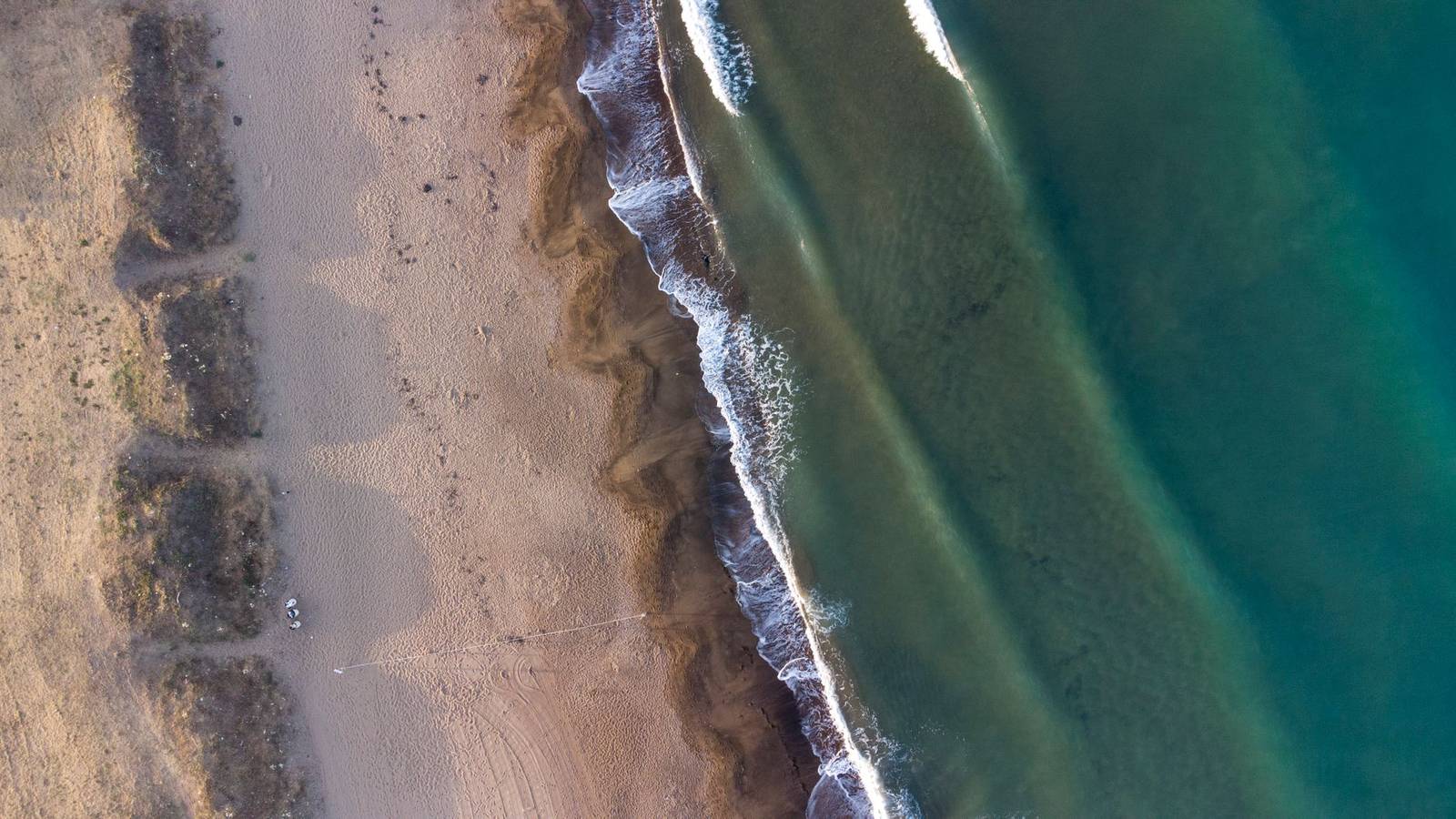
Two other west-coast spots suit stronger surfers:
- Silver Rock: a reef with barrelling lefts and fast rights in swells of 2-12ft from the SW, which works even in onshore winds, per Wavelength.
- La Speranza: a point break with right-hand tubes that Wavelength says is not for anyone below an advanced level.
Adriatic, Sicily and the south
Opinions split on the Adriatic. The Surf Atlas says to forget it, while Wavelength says spots around Ancona and Ravenna are popular, with sheltered waves such as Marina De Ravenna. Treat it as a bonus, not a destination.
Sicily is the better bet for a second island. The Surf Atlas names Isola delle Femmine on the north coast as a strong option for beginners and intermediates in the wilder winter months.
How to plan a trip around the waves
Italy rewards flexibility over a single fixed base. The Surf Atlas suggests picking one region, probably Sardinia or Sicily, and driving around in a rental car.
- Choose a region that matches your level: Levanto or Forte dei Marmi for learning, Capo Mannu or Varazze for experience.
- Travel between November and March if you want the most reliable swell.
- Check the forecast daily and stay within reach of several spots.
- Plan transport. Italy Planner says Sardinia’s west coast surf spots are inaccessible by public transport.
Once you have a region in mind, build a surf trip packing list around winter water, because The Surf Atlas says to bring along the rubber.
Frequently asked questions
Which Italian surf spot is best for beginners?
Show answer
Levanto is a good start, with several breaks suited to learners according to The Surf Atlas. Forte dei Marmi and Isola delle Femmine are also described as friendly to learners and beginners in winter.
Can you surf near Rome?
Show answer
Yes. Ostia is the closest beach break, and italia.it gives September to March as the best time. Wavelength warns the waves can be decidedly average.
Can you surf Varazze at night?
Show answer
Italia.it says the spot has a lighting system for night sessions, but you must hold a UISP membership card to use it.
Is the Adriatic worth a trip?
Show answer
Not as a main destination. The Surf Atlas says it doesn’t work, though Wavelength notes sheltered spots such as Marina De Ravenna.