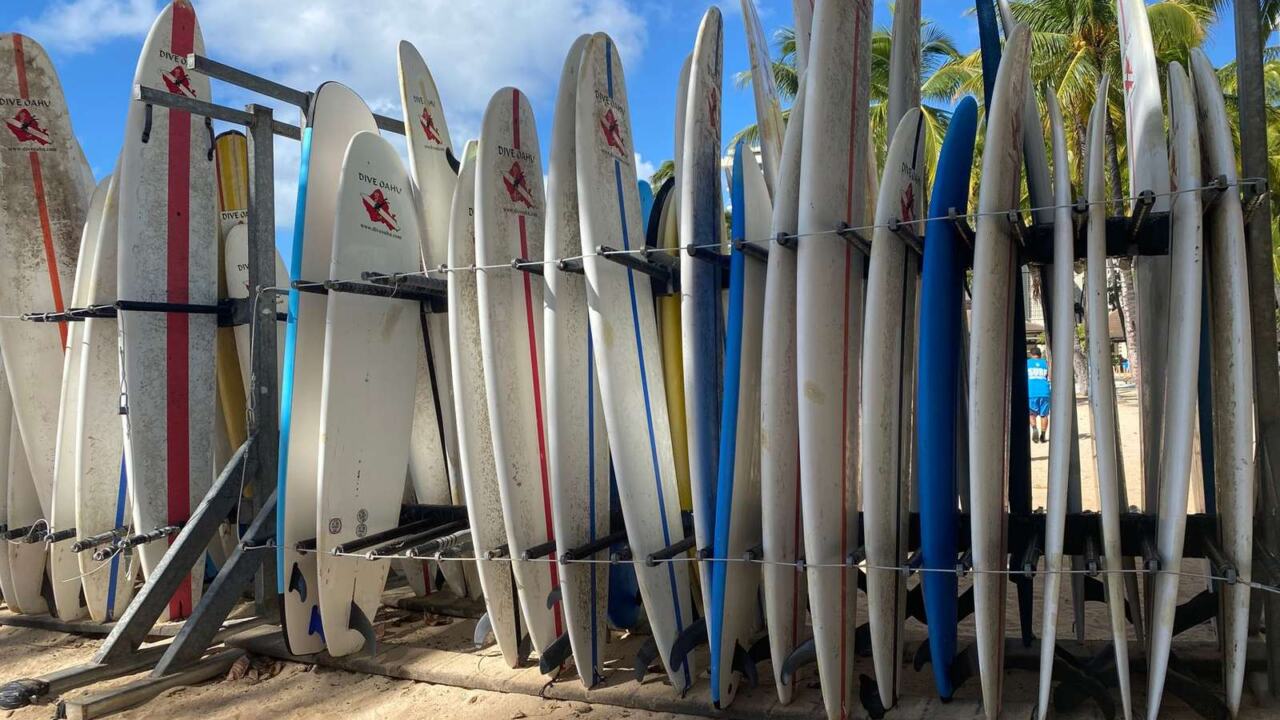
Staring at a wall of boards and wondering which one is yours? The main types of surfboards are longboards, mid-lengths, shortboards, fish, guns and soft-tops, and beginners usually start long or soft.
This guide belongs to the wider surfing section of the site and covers board shapes only.
| Board type | Typical size |
|---|---|
| Longboard length | 9’0″ to 10’0″+ |
| Mid-length length | 6’6″ to 8’0″ |
| Shortboard length | 5’6″ to 6’6″ |
| Fish length | 5’2″ to 6’4″ |
| Longboard volume | 65 to 100+ litres |
| Shortboard volume | 22 to 35 litres |
These ranges come from the Rapture Camps board-types guide. Other guides draw the lines differently and figures can change, so check the source before you rely on them.
How do the main types of surfboards differ?
Every surfboard shape is a set of trade-offs between stability, speed, maneuverability and wave range, as the Rapture Camps guide puts it. Once you know which dial a shape turns up, the names stop being confusing.
These design features explain most of the differences:
- Length: longer boards paddle faster, catch waves earlier and offer more stability, while shorter boards turn more easily but ask more of your paddling.
- Width: wider boards feel steadier from rail to rail, and narrower boards change direction faster.
- Thickness: thicker boards have more volume (buoyancy), and thinner boards respond more to what the rider does.
- Rocker: this is the curve from nose to tail when viewed from the side. More curve helps in steep, hollow waves, and a flatter board is faster in small ones.
- Rails: fuller, rounded rails are more forgiving, and thinner, sharper rails turn harder in powerful waves.
- Tail and fins: tail shapes include squash, round, swallow and pin, and fin setups run from single fin and twin fin to thruster and quad.
Volume is the figure to watch. Rapture Camps lists a longboard at 65 to 100+ litres and a shortboard at 22 to 35 litres, which shows how much buoyancy you give up as boards get shorter.
Longboards: the stable, easy-to-paddle option
The longboard is the oldest and most traditional of modern surfboard designs, according to Surf Science. That site counts boards from 8 feet to 12 feet, while Rapture Camps lists 9’0″ to 10’0″+, so the cut-off depends on who is writing.
Longboards glide. They paddle effortlessly, catch waves long before shorter boards and carry speed through flat sections without pumping, and advanced riders can cross-step to the nose and hang five or hang ten.
The cost is weight. Longboards are heavy and so difficult to duck-dive, less maneuverable in critical sections and challenging to transport, and they are not designed for steep, hollow waves.
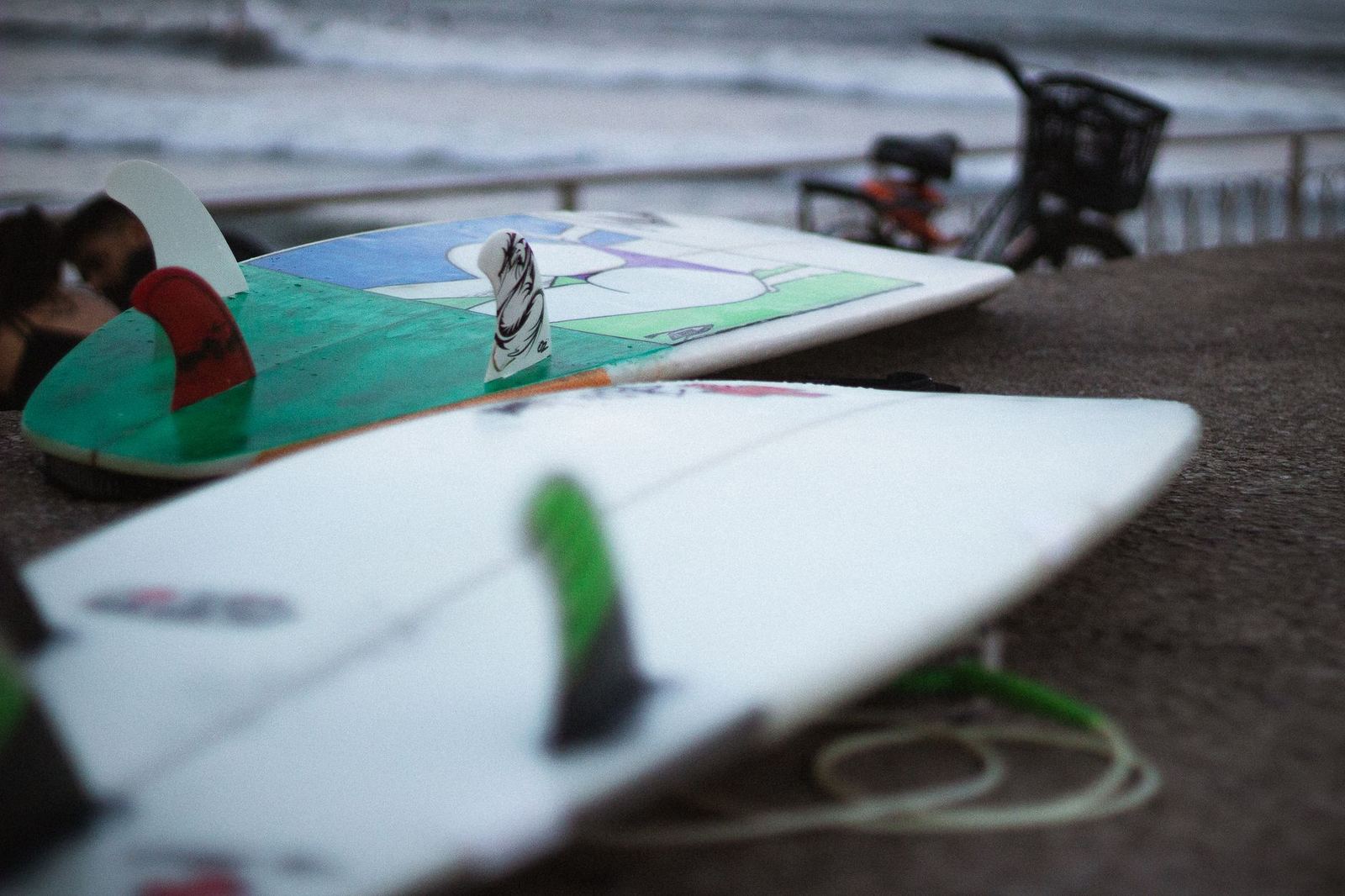
Mid-lengths, funboards and eggs: the bridge
Mid-lengths close the gap between longboards and shortboards, and Explore says riding one gives you a nice balance between stability and maneuverability. That site puts them between 7.5 and 8.5 feet, while the Rapture Camps guide lists 6’6″ to 8’0″.
The funboard sits in this group too. Surf Science gives 6 feet to 8 feet and describes it as a fit for surfers who want to move to a smaller board while keeping paddling power and stability.
The egg gets its name from having a little extra in the middle. Rapture Camps groups it with fun shapes and hybrids at 5’10” to 7’2″, and Explore warns that it takes a little more skill than a soft-top or longboard because the nose can dive if you are not careful.
Shortboards and fish: performance and small-wave speed
The shortboard is the board you see in competitions and on magazine covers. Surf Science says the design reinvented high performance surfing in the 1970s, and the Rapture Camps guide lists 5’6″ to 6’6″ with a thruster setup of three fins.
Shortboards respond to every input and allow vertical maneuvers such as airs, snaps, floaters and barrel riding. The price is effort, because Explore notes that surfers have to paddle harder to chase a wave.
That is why this shape suits advanced surfers. Rapture Camps warns that if you cannot consistently catch waves, pop up cleanly and execute turns on a larger board, a shortboard will amplify those deficiencies.
The fish is a shortboard that differs in shape, as Club of the Waves explains: a wider, rounder nose, a wider mid-section and a swallow tail, designed for small to medium sized waves. The Rapture Camps guide lists its length at 5’2″ to 6’4″.
Surf Science adds that the fish gained popularity in the 1970s and works very well in small mushy surf. Hybrids mix design elements from different board types, and Rapture Camps says fish and hybrid designs maximize speed in small waves through volume, width and alternative fin setups.
Guns and soft-tops: the two extremes
The gun is for big days. Surf Science calls it the surfboard you take out when the waves are huge, and Rapture Camps lists 6’6″ to 10’0″+.
According to Club of the Waves, the name derives from the term “elephant gun”, meaning the board is the surfer’s gun for hunting down big waves. You will rarely need one while you are learning.
Soft-tops sit at the other end of the scale. Club of the Waves says they are designed specifically for beginners and younger surfers, and that their safety properties and durability make them an obvious choice for surf schools and rentals. Rapture Camps lists them at 5’0″ to 9’0″.
There is a trade-off in speed. Explore says hard tops are faster in the water but not right for everyone, which is why soft-tops make sense when you are just starting out.
Which of the types of surfboards should you ride?
Match the board to the surfer you are now, not the one you hope to be next year. Here is a rough ladder drawn from the guides above:
- Brand new: a longboard or soft-top, for stability and safety.
- Getting comfortable: a mid-length, funboard or egg.
- Small, mushy days: a fish or hybrid.
- Advanced and chasing performance: a shortboard.
- Big, powerful waves: a gun.
If you are still at the starting line, the guide on how to start surfing is the place to begin. Once you know which type suits you, the guide on how to choose a surfboard helps you narrow it down to a specific board.
Frequently asked questions
What are the main types of surfboards?
Show answer
Surf Science lists the most common types as the shortboard, longboard, funboard, fish, gun and hybrid. Many other guides add mid-lengths, eggs and soft-tops, which overlap with those groups.
Which type is best for a beginner?
Show answer
A longboard or a soft-top. Club of the Waves says longboards are much more stable, easier to paddle and great for catching smaller waves, making them the ideal surfboard to learn on.
Is a shortboard harder to ride than a longboard?
Show answer
Yes, because a shortboard has less volume and needs more paddling and more speed management. Explore notes that surfers have to paddle harder to chase a wave on one.
What is the difference between a fish and a shortboard?
Show answer
A fish is a type of shortboard with a wider, rounder nose, a wider mid-section and a swallow tail. It is built for small to medium sized waves, according to Club of the Waves.