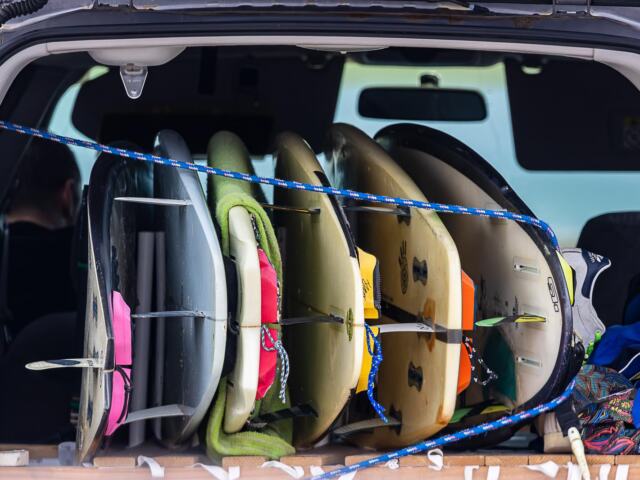
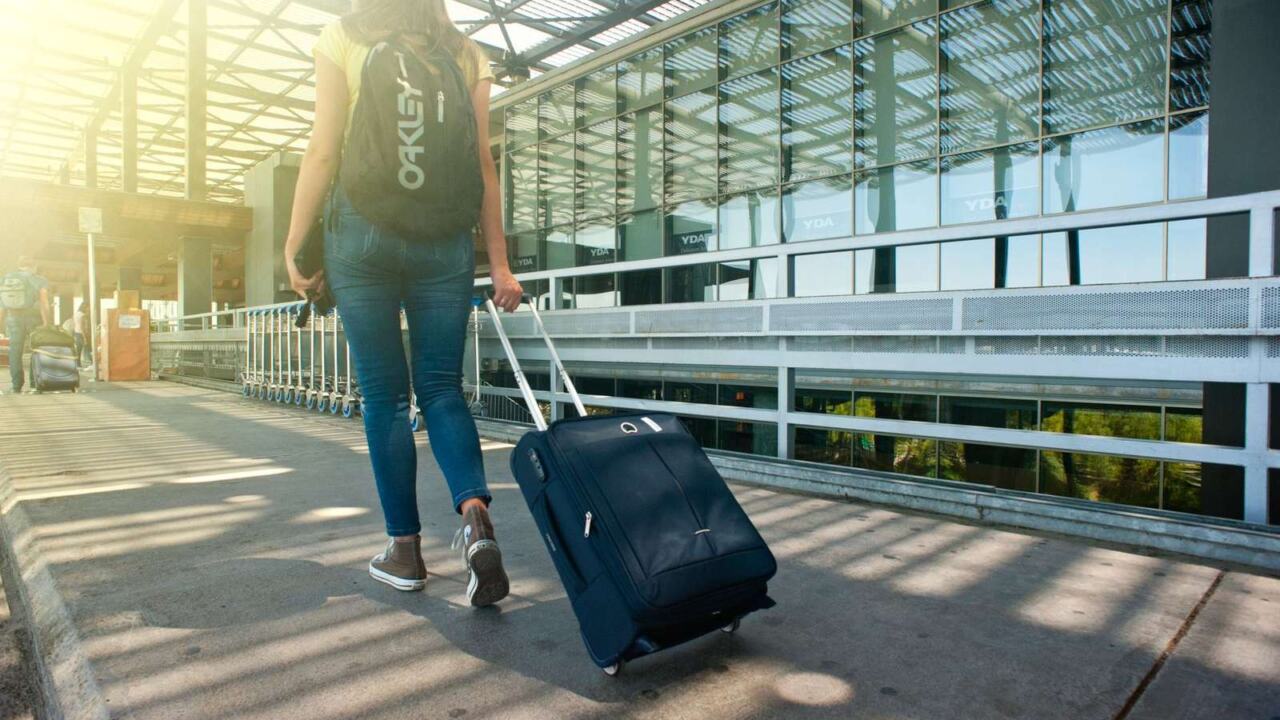
Worried your board will cost more than your ticket? Here is how to fly with a surfboard: check the airline’s size and weight limits, pack the board in a proper board bag, and confirm fees before you book.
More trip-planning guides sit in the site’s surf travel section.
| Item | Value |
|---|---|
| Typical US airline fee for a board within limits | $35-45 (on average 9 feet and less than 50 pounds) |
| Size cap at Delta’s standard rate | Under 115 inches (length + width + height) |
| American Airlines overweight fee | $150 for 51 lb to 70 lb (23 kg to 32 kg) |
| JetBlue board fee | $100 per board each way |
| Cost range when limits are exceeded | $75 up to $300 |
These figures come from CRSurf’s 2025 airline roundup and a board-bag maker’s April 2022 guide. Airlines change fees without notice, so check the source and the airline’s own page before you rely on them.
Check the airline’s board policy before you book
The cheapest fare is rarely the cheapest trip once a board is involved. Matador’s airline list from Feb 20, 2015 repeated horror stories of surfers being charged more in fees to carry boards than the original ticket price of the flight.
CRSurf’s 2025 roundup says American, United and Delta now count boards as a regular checked bag. On that basis a boardbag within the limits costs $35-45 on average, if it is about 9 feet or shorter and under 50 pounds, according to CRSurf.
Policies also move. In the 2015 Matador list, Aeromexico charged $40 if paid in advance or $50 at the airport; CRSurf’s 2025 page lists $150 each way for each piece of surf equipment. That gap is a good reason to treat any old fee table as a starting point only.
The bag maker’s April 2022 guide adds that many airlines quietly change policies and some staff are unfamiliar with their own rules. It also argues that paying another $200 for a surfer-friendly airline can save $400 in unbudgeted board bag fees.
A sensible booking routine looks like this:
- Open the airline’s sports-equipment page and read the limits on board length, weight and number of boards.
- Compare the fare plus board fee across carriers, not the fare alone.
- Check the return flight and any connecting carrier, because the rules can differ.
- Save or print the policy page so you can show it at check-in.
What does it cost to fly with a surfboard?
Fees vary widely by carrier. CRSurf’s 2025 roundup lists these examples for US airlines, and each entry has extra conditions on its own page.
| Airline | Fee listed |
|---|---|
| Delta | $35 to 45 |
| Southwest | $75 |
| JetBlue | $100 per board each way, plus the usual checked-bag fee |
| Spirit | $100 each way |
| United | $150 to $200 |
The gap between Delta and United shows why you should compare. Per CRSurf, Delta prices boards as ordinary checked bags, while United treats them as special items subject to standard charges for oversized and overweight bags.
Some carriers have treated boards as part of the free allowance. The Feb 20, 2015 Matador list said Air New Zealand took boardbags up to 2 metres long that way, as you can read on Matador. That page is old, so use it as an example of how much policies differ, not as a price to plan on.
The bag maker’s guide says height and weight limits can send your cost from $75 up to $300 quickly, as noted in the April 2022 post. Longboards and extra boards are where bills usually jump.
How to pack your board for the hold
Airline pages give more packing rules than most surfers expect. These steps follow what the 2025 CRSurf roundup reports from several carriers.
- Remove or protect fins. American’s listed policy says keels, kedges and fins must be removed or properly protected to prevent damage to other bags. Southwest’s entry says fins must be removed and placed in carry-on or checked baggage.
- Use a proper board bag. United’s entry accepts boards packed in appropriate board bags. American’s says boards not properly packed in a hard-sided case will be treated as fragile items.
- Keep the bag for the board. Alaska’s entry warns that additional baggage fees may apply if contents unrelated to the equipment are included.
- Weigh it at home. Towels, clothes and wetsuits add weight quickly, and the bag maker’s guide says to pack light and weigh the bag before you leave.
- Measure the bag. Add length, width and height, because that sum is what most size limits use.
Stuffing a wetsuit and a few towels into the bag feels like free padding. It is also the easiest way to turn a standard fee into an overweight one.
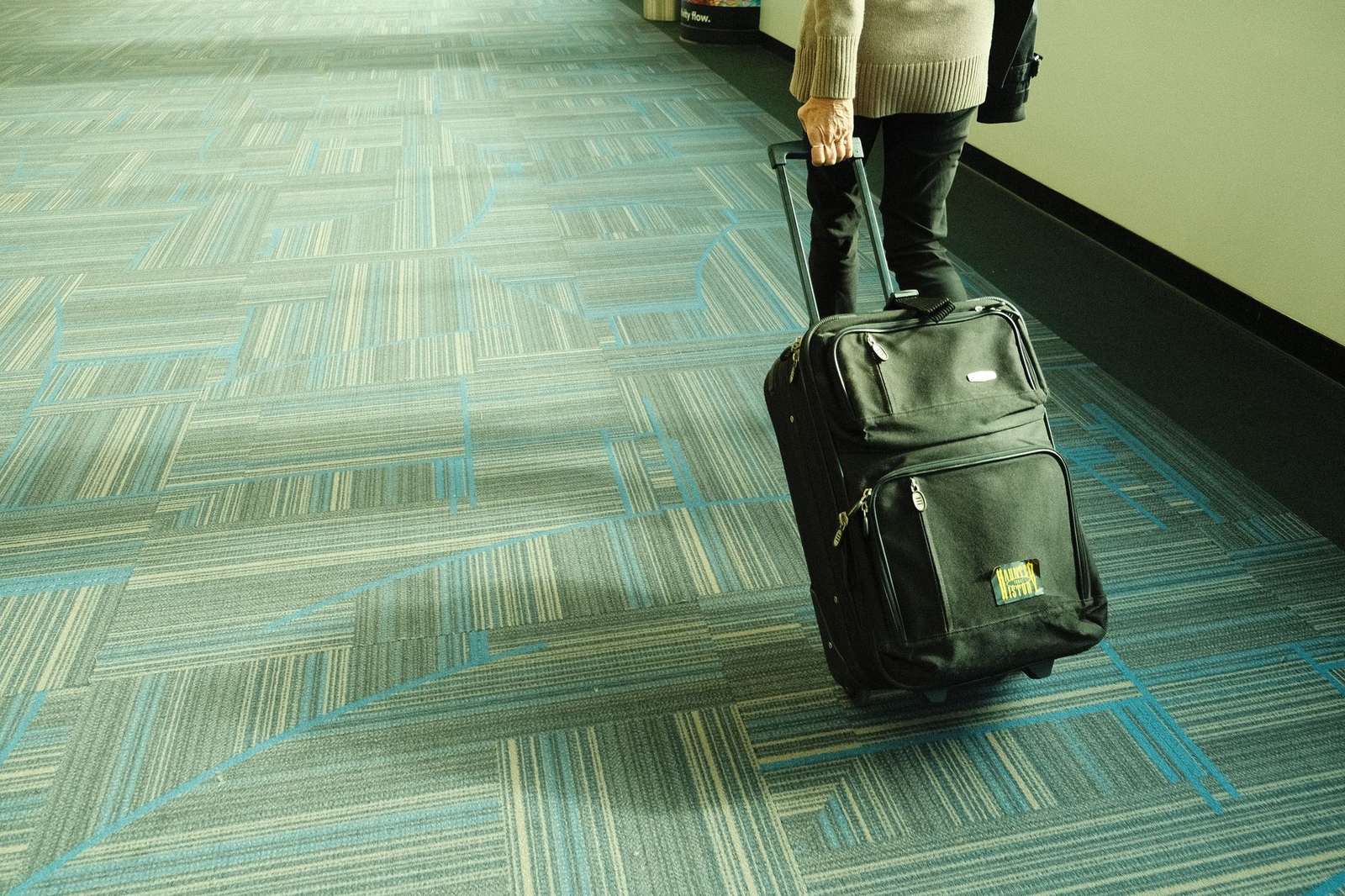
American’s listing shows how sharp the weight line can be: standard checked-bag fees apply up to 50 lb, then a $150 fee applies from 51 lb to 70 lb, according to CRSurf.
Size, weight and board-count limits
Most limits use linear inches, which means length plus width plus height. The bag maker’s guide warns that when an airline says “up to 115 linear inches”, that is the total of all three measurements, not the length of your longboard bag.
These examples from CRSurf’s 2025 roundup show how much the limits differ:
- Delta: length + width + height under 115 inches, up to two boards per bag, and an excess weight fee for bags over 50 lb.
- Copa: maximum weight 45 kg (100 lb), maximum 115 linear inches (294 linear cm), and 3 boards per case.
- Aeromexico: 204 cm / 80 inches on a narrow-body aircraft and 294 cm / 115 inches on a wide-body.
- JetBlue: only one surfboard per case. Spirit: a maximum of two per case.
Aircraft size matters, as the Aeromexico entry shows. United’s listing accepts board bags measuring more than 115 linear inches (292 centimeters) on its own flights, but United Express flights won’t accept bags over 80 linear inches (203 centimeters), as CRSurf reports.
Board count is the other trap. The bag maker’s guide says that with longboards or more than 2 boards, many airlines push the oversize and overweight price up sharply and some will not carry more than two boards at all.
At check-in and on connections
The agent at the desk handles many price structures, and the bag maker’s guide says they are often guessing themselves. Printing the airline’s posted policy gives you something concrete to show if a charge looks wrong.
- Return flight: make sure the policy matches the one on your outbound flight, since boards can cost much more on the way home.
- Connections: check the rules for layovers, aircraft size and any change of airline on the route.
- Notice: some airlines want advance contact. For Air France, Matador’s Feb 20, 2015 list said you must notify customer service at least 24 hours before flying.
- Space: not every plane has room. For Alitalia, the same Feb 20, 2015 list said not all planes have room for boards, so you must check with the airline when booking.
The bag maker’s guide also suggests tipping the bag handler: its line is that $10 up front may save a board from a $100 repair. Treat that as a courtesy rather than a guarantee, and read the full April 2022 post for its other tips.
Renting or buying at the destination
Sometimes the best way to fly with a board is not to fly with it. CRSurf notes that in Costa Rica a number of surf shops rent quality, ding-free boards, and that buying a new board and selling it back used can still cost less than bringing your own.
That advice comes from a Costa Rica travel site, so check local rental prices for your own destination first. If you are still choosing where to go, the guide to the best time to surf in Europe can help you match your dates to the swell.
Once you land, take a few minutes to learn the beach flag meanings before you paddle out at an unfamiliar beach. Rules and warnings change from one coast to the next, and a rented board does not make the water any easier to read.
Frequently asked questions
Do airlines treat a surfboard as normal checked luggage?
Show answer
Some do. CRSurf’s 2025 roundup says American, United and Delta count boards as a regular checked bag, but size, weight and extra fees still apply. Check the airline’s own page for your route.
How do I avoid paying more than my ticket costs?
Show answer
Compare the fare plus the board fee across carriers, keep the bag under the weight and linear-inch limits, and pack only the board. Matador’s Feb 20, 2015 list noted surfers charged more for their boards than for the flight itself.
How many boards can go in one bag?
Show answer
It depends on the airline. CRSurf’s 2025 roundup lists up to two boards per bag at Delta, one per case at JetBlue, a maximum of two per case at Spirit and 3 per case at Copa.
Do I need to tell the airline in advance?
Show answer
Sometimes. Matador’s 2015 list said Air France wanted notice at least 24 hours before flying and told travellers to confirm with Alitalia when booking. Check your carrier’s current page before you travel, because airlines can change their rules at will.