
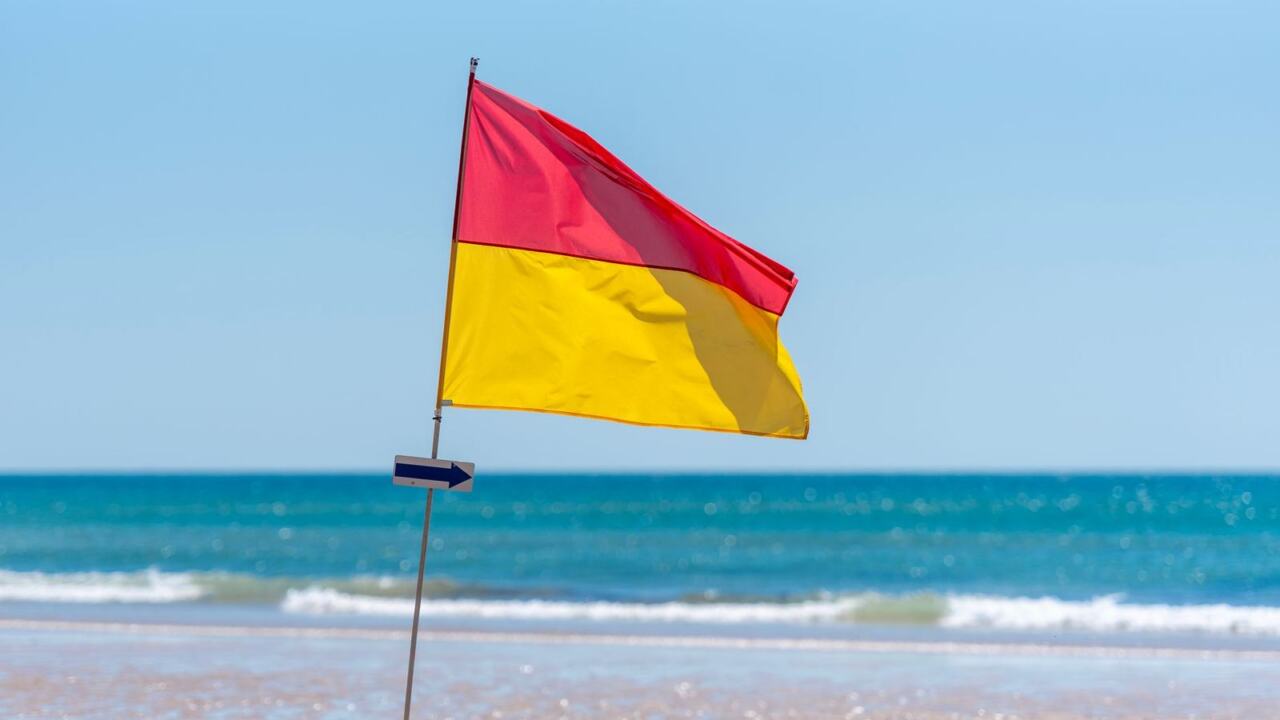
Standing on an unfamiliar beach, you want to know what the flags mean before you paddle out. The core beach flag meanings are simple: yellow is medium hazard, red is high hazard, and double red means the water is closed.
Planning time on the coast? Our guide to surf travel puts these flags in context.
| Flag | Meaning |
|---|---|
| Yellow | Medium hazard |
| Red | High hazard |
| Double red | Water closed to public use |
| Purple | Marine pests present |
| Red over yellow (halved) | Area protected by lifeguards |
| ILS recommended flags (2011 paper) | 8 flags |
These figures come from the Alabama Department of Public Health and the International Life Saving Federation. Flag systems and local rules can change, so check the source and the local authority before you rely on them.
The core beach flag meanings
Most beach flag systems grow out of guidelines from the International Life Saving Federation (ILS). As of the Alabama Department of Public Health’s July 2024 post, those guidelines had been endorsed and implemented by the United States Lifesaving Association (USLA), according to the health department’s flag guide.
The four condition flags you will meet most often are:
- Yellow: medium hazard. Moderate surf and/or currents are present, and weak swimmers are discouraged from entering the water.
- Red: high hazard. Rough conditions such as strong surf and/or currents are present, and all swimmers are discouraged from entering the water.
- Double red: the water is closed to public use.
- Purple: marine pests such as jellyfish or stingrays are present. It is not intended to indicate sharks.
A single red flag is serious, but it is not always a ban. A Flags of the World page on US beach flags says you can still swim under a single red flag, but only with extreme caution and only if you are a strong swimmer. If you are unsure of your ability in the conditions, treat red as a reason to stay out.
Lifeguard, surfing and evacuation flags
Beyond the condition flags, a second group marks where to swim, where to surf and when to get out. The Alabama health department’s guide lists them as follows.
- Red over yellow (halved): the area is protected by lifeguards. Used in pairs, these flags mark a zone where swimming and/or body surfing is permitted.
- Black and white (quartered): used in pairs to mark a zone for surfboards and other non-powered watercraft.
- Yellow with a central black ball: surfboards and other non-powered watercraft are prohibited.
- Red and white (quartered): emergency evacuation. Swimmers should leave the water because of an emergency.
- Orange windsock: shows the direction of offshore winds and signals that inflatable objects are unsafe in the water.
For surfers, the black and white flags matter most. Set up your session inside the marked board zone, and if you see the yellow flag with the black ball, leave the board on the sand.
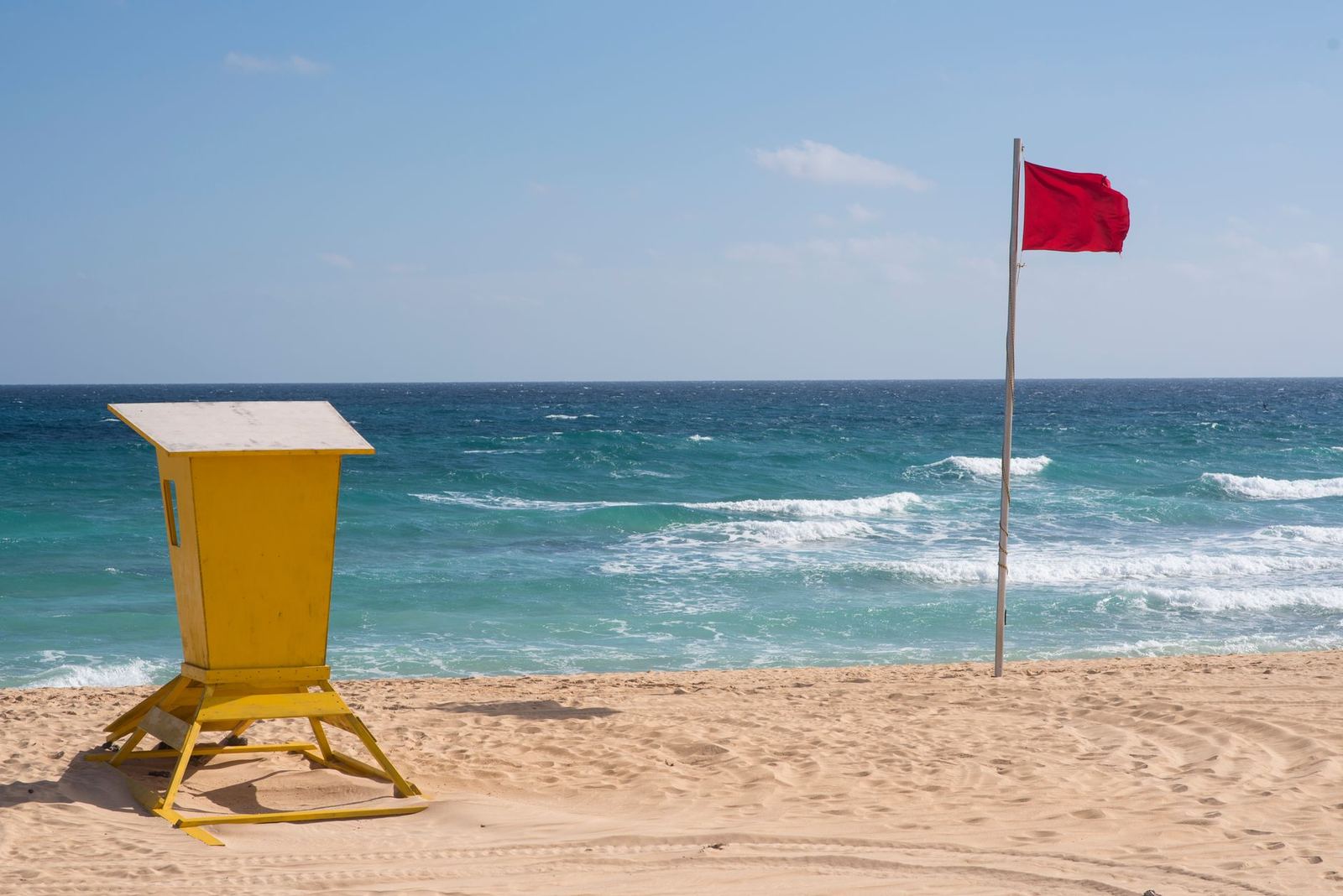
The same guide gives examples of emergencies behind a red and white flag: a dangerous marine creature such as a shark, contaminated water, or a lifeguard search for a lost child. It adds that a double red flag may alternatively be appropriate.
Where flag systems disagree
There is no single worldwide standard. In an ILS paper dated March 2011, the ILS standard had 8 recommended flags while a draft standard from the International Organization for Standardization (ISO) had 6, as the ILS paper shows.
The biggest difference was the red flag. According to that 2011 paper, under ISO a red flag means “Do not enter the water”, while ILS states that a red flag means “High Hazard”. Always check which wording the local lifeguards use, because the 2011 draft may have changed since.
Green is another point of difference. The ADPH guide says the ILS does not include a green flag in its guidelines because it suggests that conditions are completely safe, although some areas use green to indicate calm or mild conditions. The South Walton Fire District’s beach safety page lists green as “Low hazard – calm condition, exercise caution” within Florida’s system, which the state adopted and enacted into law in 2005.
Can you trust a flag to show every danger?
A flag is a general warning, not a full forecast. The South Walton Fire District says the flags do not specifically advise the public of rip currents, which may give no visible sign from shore.
Three limits are worth remembering:
- Local scale: the Alabama health department warns that what is thought of as a “medium” hazard at one beach might be considered a “high” hazard at another.
- Wide areas: South Walton flag colors are determined by the most dangerous surf or rip conditions within the county’s beaches, so your spot may look calmer than the flag suggests.
- Missing flags: some beach areas might not have flags on display. If so, do not assume conditions are safe, and check with local authorities.
The Flags of the World page makes the same point: the absence of beach warning flags does not assure safe water. It also describes shark flags used in some US places, such as a white flag with a black shark meaning a shark is near the beach and people must get out of the water. Those are local variants, so ask a lifeguard what applies where you are.
Checking flags on a surf trip
Flag knowledge is one part of preparing for a new coast. If you are bringing a board, how to fly with a surfboard covers the travel side, and how to plan a surf trip is a sensible place to start on the wider logistics.
Once you are on the sand, a simple routine helps:
- Look at the flags at your beach access and any lifeguard tower before you walk to the water.
- Read any sign that explains the colors used, since local systems can add or vary flags.
- Ask a lifeguard where the swim zone and the board zone are today.
- If no flags are flying, do not treat that as a safe sign.
- Before you travel, check local tourism, weather, government or municipal websites for advisories.
That last step follows the Alabama health department’s advice for visitors traveling to other states and their beaches. Its flag guide also points to National Weather Service resources on surf conditions and rip currents.
Frequently asked questions
What does a yellow flag mean at the beach?
Show answer
Under the system described by the Alabama Department of Public Health in July 2024, yellow means medium hazard: moderate surf and/or currents. Weak swimmers are discouraged from entering the water, and everyone else should use enhanced care and caution.
Does a red flag mean you cannot go in the water?
Show answer
It depends on the system. The ILS defines red as high hazard, while the draft ISO standard in the ILS’s March 2011 paper defined it as “Do not enter the water”. Under the USLA definitions, all swimmers are discouraged from entering the water, and those who do should take great care.
Is there a green beach flag?
Show answer
Some areas use one. The ILS leaves it out of its guidelines because it suggests that conditions are completely safe, according to the ADPH guide. The South Walton Fire District lists green as low hazard with calm conditions, and still asks you to exercise caution.
Does a purple flag mean sharks are nearby?
Show answer
No. The ADPH guide says purple indicates marine pests such as jellyfish or stingrays, and that it is not intended to indicate the presence of sharks.