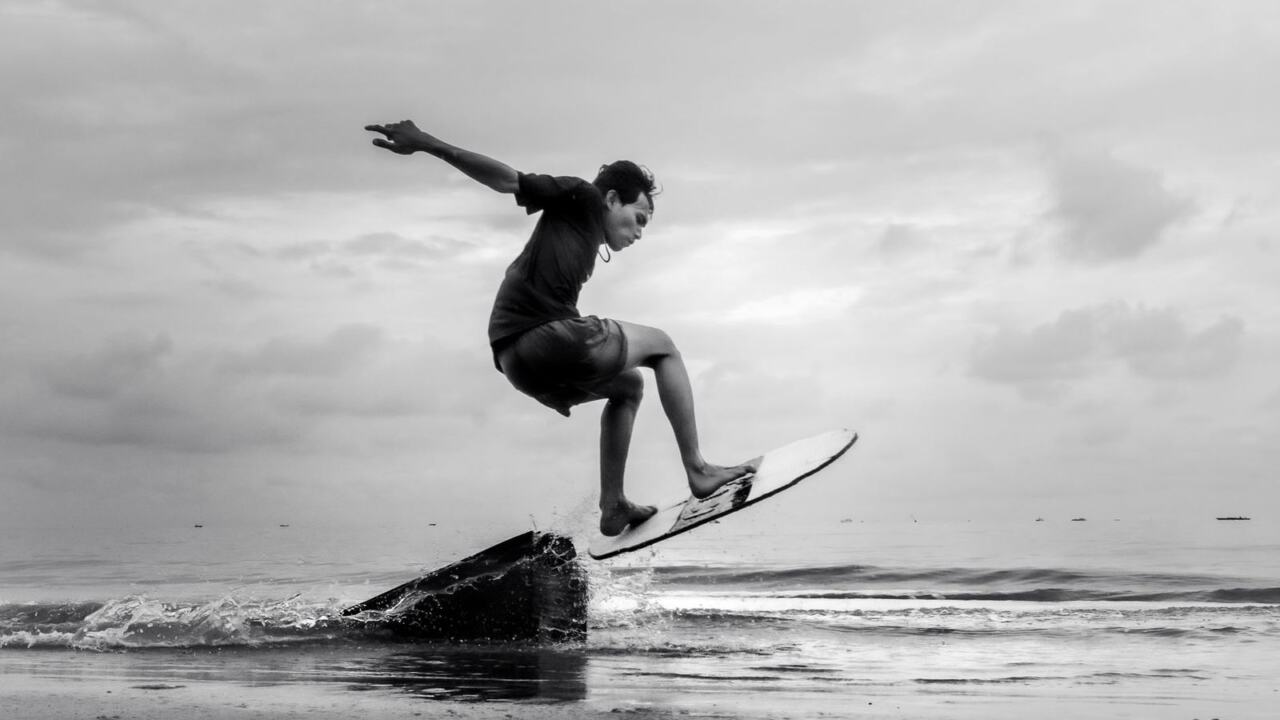
Nervous about big waves? Skimboarding for beginners starts on flat, wet sand with a wood board, not in surf. You practise the run, drop and jump there, and you should expect a few falls.
Skimboarding is one of the shoreline activities covered in the water sports section of this site.
| Item | Value |
|---|---|
| Water film to slide on | 1/4″ thin film left by the previous wave |
| Water depth for wave skimboarding | Waist-deep or less |
| Main skimboard types | 2 (flatland and wave) |
| Best first board | Wood |
| Youngest supervised riders | As young as 5 years |
| Safest, easiest first manoeuvre | Speed run |
These figures come from the Victoria Skimboards tips page and the American Surf Magazine step-by-step guide. They can change, so check the source before you rely on them.
Where to start: a flat beach and a thin film of water
Your first sessions work best on a flat beach with little slope near the water’s edge, because that lets you get used to skimming on the sand. A beginner guide from Panama Jack suggests leaving wave skimming until your flow is down and you can try a beach with a powerful shore break.
Look for a wide area covered by a 1/4″ thin film of water from the previous wave, as the Victoria Skimboards tips describe. Beginners there are taught to slide along the shoreline, not directly into the waves.
Some beaches have cusps, the crescent-shaped cuts that waves make in the shoreline. Start at the point nearest the ocean and aim your slide toward the back middle of the cusp, where the beach is flattest. That gives you a long slide before you curve back toward the ocean.
Pick your day as carefully as your spot. The American Surf Magazine guide advises calm winds and manageable wave heights, since strong wind makes the board hard to control and very high waves can be intimidating. For wave skimboarding it says the water should ideally be waist-deep or less, with a gradual slope into the ocean.
Before you run, check the spot against this list:
- Little slope near the water’s edge.
- A thin film of water covering a wide, flat area.
- Calm wind and modest waves.
- No rocks or sandbars in the water, and nobody in the path of a loose board.
Which board should you pick?
There are two main types of board: flatland skimboards for skimming on the sand and wave skimboards for riding waves, according to American Surf Magazine. Wave boards are typically smaller and have a more pronounced rocker, which is the curve that helps you handle waves.
For learning, wood is the usual advice. Victoria Skimboards calls wood boards excellent for beginners because they are steady and glide a long way across the sand. It adds that a novice will abuse the board while learning to run and jump on, so there is no point wrecking an expensive foam board early.
The Panama Jack guide agrees that smaller, flatter wood boards are more cost friendly and better for sand skimming. Newer foam and carbon-fibre boards suit wave skimming. It recommends asking a professional at a local surf shop which board will suit you.
Two small jobs before your first session:
- Wax the deck with surfboard wax so your feet do not slip.
- Optionally, use car wax on the bottom to reduce wear from the sand.
Run, drop and jump: the first ride step by step
The sequence is simple to describe and takes real practice to land. You run, you drop the board on the thin film of water, and you run onto it without losing speed. The Panama Jack guide warns that simply hopping straight on top means you will fall and it will hurt.
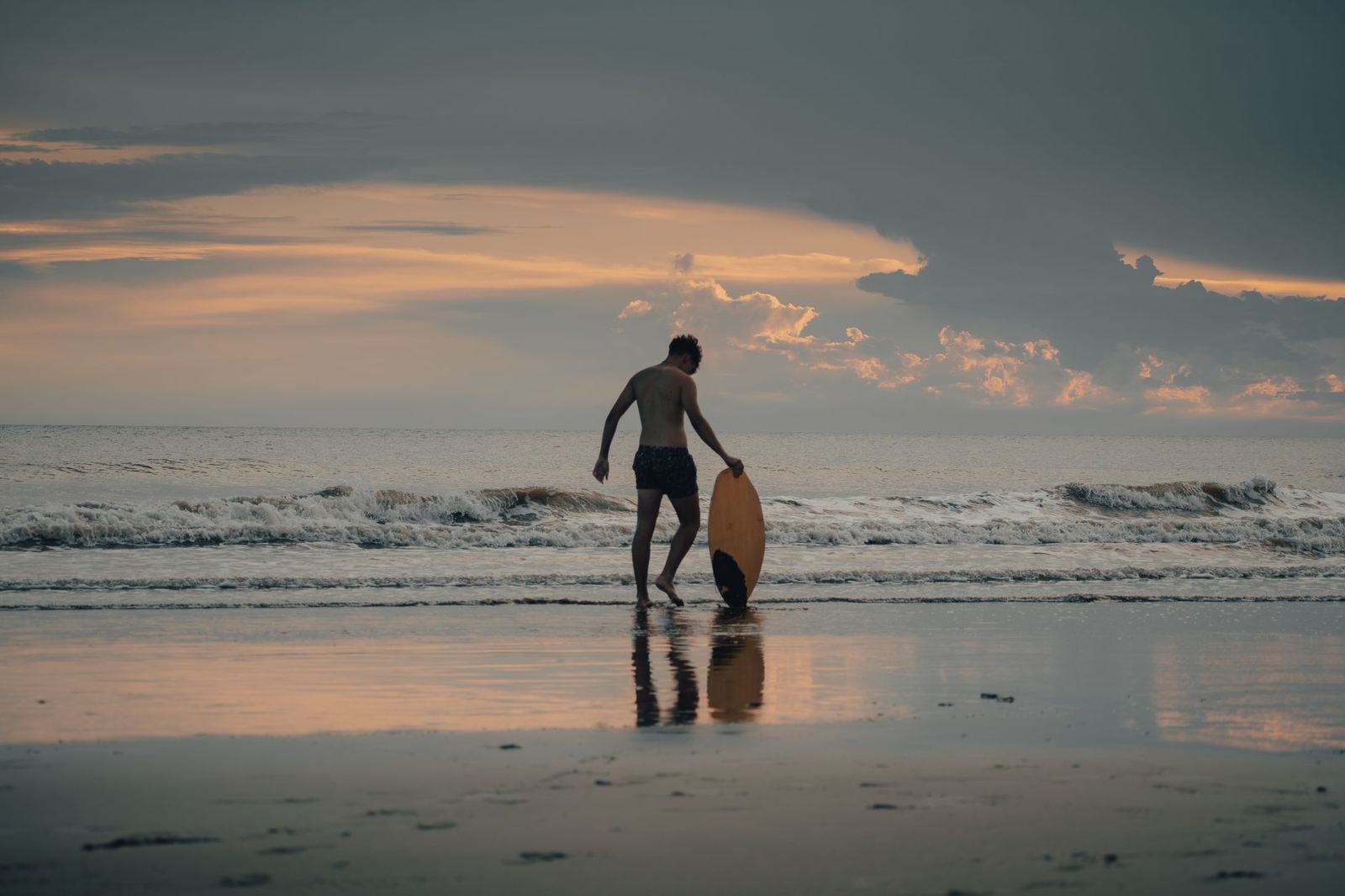
- Warm up. Stretch your legs, arms and back before each session, because skimboarding involves running, balance and quick movements.
- Hold the board. Put one hand on the back tail and one hand on the side about halfway, and keep the board out in front of your body.
- Wait for the wave. Let a wave wash up and then suck back out, leaving a thin coat of water on the sand.
- Run. Take quick steps toward the water and build speed. Keep your eye on the wave, and look down only long enough to drop the board.
- Drop. Place the board flat in front of you on the thin coat of water while keeping your forward momentum.
- Run onto it. Step on with your lead (front) foot toward the front of the board first, then follow with the back foot.
- Glide. Keep your weight centred, knees slightly bent and body low, with the back foot near the tail.
Most skimboarders start with their dominant foot forward, similar to skateboarding or snowboarding, but the American Surf Magazine guide says you can choose the stance that feels comfortable.
Once you can glide, try the speed run. You skim up the shoreline and turn off the swoosh of a wave toward the dry sand, which Victoria Skimboards calls the safest, easiest manoeuvre in skimming. Time your slide so you hit the wave just after it has flattened enough to ride up on.
Wood boards will not float once a thin layer of sand has washed over them. Just before you stop sliding, kick the board away from you back up the slope, then turn and walk up to grab it.
Staying safe and ready for falls
Falling is part of the deal. The Panama Jack guide says the sport takes a lot of running, jumping, balance and plenty of falls that can leave bruises and shell shards in your skin. Light injuries and sand in the eyes come with the learning.
The Victoria Skimboards safety advice is a good checklist:
- Avoid skimming where people might get hit by a board.
- Check the water for rocks and sandbars first.
- Never do flips into shallow water.
- Keep control of your board and do not let it get away from you.
- Learn slowly, and do not run any faster than you are prepared to fall.
- Do not try going into the waves until you have mastered the basic run, jump-on and slide.
- Be courteous to other beachgoers and respect the lifeguards’ wishes.
The same page cautions that riding back down waves means accepting the risk of being thrown beyond the cushion of water onto hard sand. Treat that as a later step, not a first-day goal.
Caring for your board and choosing your next step
A skimboard is not unbreakable, so look after it. Victoria Skimboards says boards dislike the heat of direct sunlight or a car trunk, because the polyester resin can soften and the board can change shape. When you finish, stick the tail in the sand and point the nose toward the sun, so as little of the board as possible faces it.
Dings also need attention. Rocks and sand wear away the finish, and dings should be patched before water can penetrate the wood or foam. Look for water stains regularly and repair holes soon.
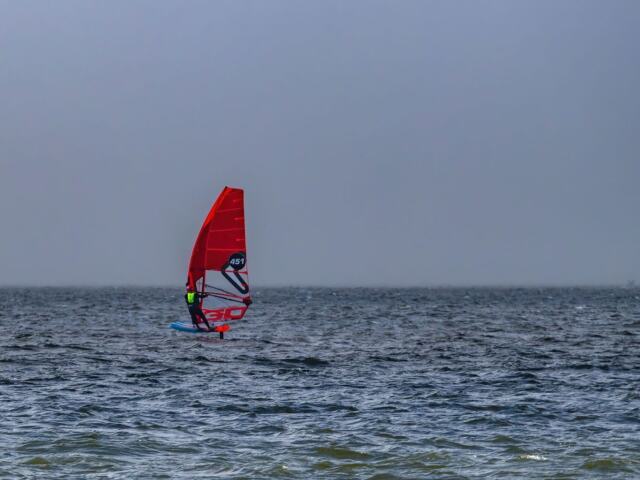
If the water where you live is cold, read how to choose a wetsuit before you plan longer sessions. If you want a wind-powered way to use the water later, windsurfing for beginners is a sensible next read.
When you start to progress, remember that turning costs speed. The Victoria Skimboards tips advise turning as little as possible and approaching a wave from a flat angle, since going straight out to a wave and expecting to ride it back is described as the worst approach.
Frequently asked questions
What is the best board for a first-timer?
Show answer
A wood board is the usual recommendation, because Victoria Skimboards says wood boards are steady and glide a long way across the sand. Foam boards become more valuable once you ride out over deeper water to catch breaking waves.
Do I need waves to start skimboarding?
Show answer
No. You can begin on a flat beach covered with a thin film of water from the previous wave, as the Victoria Skimboards tips explain. Wave skimming can wait until you are comfortable on the sand.
Is there an age limit?
Show answer
The Victoria Skimboards tips say that, with adult supervision, skimboards are a big thrill for kids as young as 5. They also note that adults as stiff as 50 enjoy the sport on a regular basis.
Why does my board sink before I reach the wave?
Show answer
The same page lists simple causes: the wave was too far out, the board is too small to carry you, the bottom curve is too pronounced, or you were not running fast enough. Check each one before changing anything else.