Worried a wetsuit will leave you freezing or flooded? How to choose a wetsuit comes down to matching thickness to water temperature, getting a snug fit, and picking an entry style you can live with.
This guide sits within our wider coverage of water sports.
| Item | Value |
|---|---|
| 4/3 suit, typical water range | 12C (55F) to 18C (65F) |
| 3/2 suit, typical water range | 15C (60F) to 21C (70F) |
| Thin suits for warm water | 1-2mm, 21C (70F) and up |
| Very cold water suits | 5-7mm, below 12C (55F) |
| Fullsuit thickness range | 2-7mm |
The temperature figures come from Wave Pool Magazine’s wetsuit guide (published October 4, 2022), and fit and entry advice draws on Quiksilver’s wetsuit guide. Figures can change and brands publish their own ranges, so check the source before you rely on them.
Wetsuit styles: matching the cut to the conditions
Before you think about thickness or size, decide how much of your body the suit should cover. A fullsuit has long arms and legs and is generally used for relatively cooler conditions, with thickness varying from 2-7mm according to Wave Pool Magazine.
The main styles look like this:
- Fullsuit or steamer: the classic cut with full leg coverage and long sleeves, described by Quiksilver as made for cool to super cold water.
- Springsuit or shorty: short legs that end above the knees, with long or short sleeves. Wave Pool Magazine says springsuits are typically 1-2mm and suit mild temperatures.
- Farmer John or Short John: a sleeveless, tank-style design that gives maximum arm mobility for paddling, with short or long legs (Quiksilver).
- Top: a shirt-like layer, typically 1-2mm, generally reserved for warm, tropical conditions per Wave Pool Magazine.
Your own cold tolerance matters here. For some surfers a fullsuit is mandatory, while others get by in a thinner cut in the same water.
How thick should a wetsuit be?
Thickness is printed inside the suit as numbers such as 4/3 or 3/2. The first number is the torso thickness in millimetres and the second is the thickness in the arms and legs, as Wave Pool Magazine explains.
As a rule, the colder the water, the thicker the suit, meaning more millimetres of neoprene insulation, according to Quiksilver. Some people run much colder than others and may want an extra millimetre all around.
These are the temperature bands Wave Pool Magazine gives in its guide:
- A 4/3 is a standard cold water suit, generally used from 12C (55F) to 18C (65F).
- A 3/2 is a standard thickness for mild temperatures, good from 15C (60F) to 21C (70F).
- Suits in the 1-2mm range are best for warm water, 21C (70F) and up.
- Very cold water suits can be 5-7mm thick, used below 12C (55F).
Notice that the bands overlap. Air temperature, wind and your own tolerance all push you towards one side of a range, and each brand also advertises the water temperature range it estimates for its suit.
Age changes the maths too. As a suit ages and becomes less water-tight, you need relatively more thickness to stay as warm as you were when it was new, as Wave Pool Magazine notes.
For a deeper breakdown of how millimetres map to conditions, read our wetsuit thickness guide.
Getting the right size and fit
A good fit matters as much as thickness. Quiksilver warns that a suit that is too big will chafe and fill with water, leaving you cold and weighed down, while one that is too tight costs you mobility and tires you out.
Start with your height and weight for a ballpark size, then refine with measurements:
- Note your current height and weight.
- Measure the circumference of your chest at its widest point, with the tape snug but not too tight.
- For a more precise fit, repeat the measuring on your neck, waist, hips and inseam.
- Compare the numbers with the size chart for the exact model you want.
Every brand, and even every model, is different, so use that model’s own chart rather than assuming a size carries over. Sizing follows the XS, S, M, L, XL convention, with tall and short options for each size, according to Quiksilver. If you can, try on suits in different sizes.
Between sizes? The same guide says to size up if you have longer arms or legs and size down if your limbs are shorter. Still unsure, it suggests going with the larger size, because more coverage on your arms and legs is better than not enough.
Back zip, chest zip or zipperless?
There are three main entry styles: back zip, chest zip and zipperless, according to Wave Pool Magazine. Each trades convenience against warmth and flex.
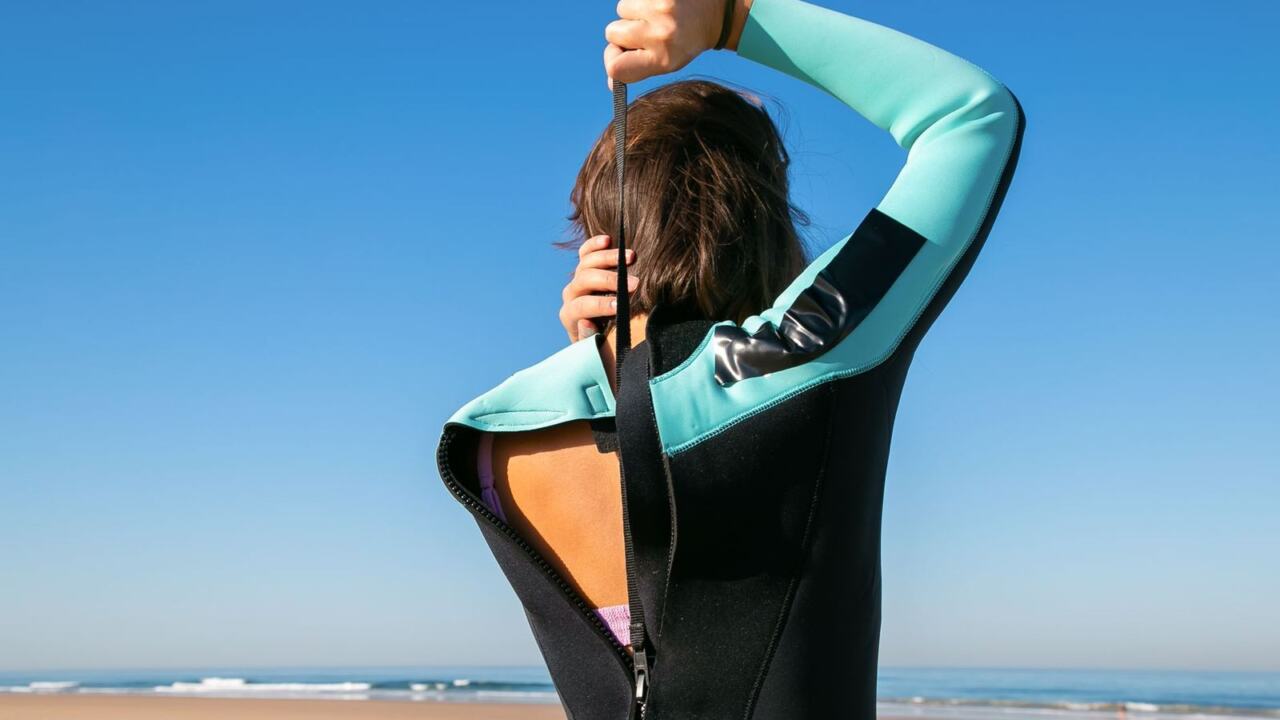
- Back zip: easier to get on thanks to the larger zipper opening, but more prone to flushing while duck diving. The long zipper also makes the suit less flexible.
- Chest zip: less prone to flushing, which makes it warmer for long sessions, and there is less zipper and more flex across the back. The smaller entry makes it harder to get on and off.
- Zipperless: a relatively new innovation that can give less flushing and excellent mobility with a perfect fit, but it is the most difficult to get on and off, especially for beginners.
Flushing means water rushing into the suit, and it is the reason a chest zip tends to feel warmer in the water. If you spend short sessions in warmer water and want an easy-on, easy-off option, Quiksilver points to a back zip.
Remember that the zipper is the only part of a wetsuit that cannot stretch. More zipper therefore means less flex, which you notice most when paddling.
Features and accessories worth checking
Small details decide how long a suit lasts. Reinforced knee pads made of thicker rubber extend the life of your suit, according to Quiksilver, so check them on any suit made for surfing.
Fullsuits and springsuits usually leave your hands, feet and head bare, which can be painful in cold conditions. Wave Pool Magazine notes that gloves cover the hands, booties cover the feet and hoods cover the head, and some fullsuits come with attached hoods.
Not every bootie is for warmth. Reef booties protect your feet from sharp reefs and are relatively thin, cutting off below the ankle, while cold water booties rise above the ankle.
If you enjoy shallow-water sessions beyond surfing, skimboarding for beginners is a good place to read next.
A simple order for deciding
Work through the choices in this sequence so no single detail drives the purchase:
- Pick a style based on the water and air conditions where you surf.
- Choose a thickness that matches your usual water temperature and how easily you get cold.
- Check the brand’s size chart and try more than one size if you can.
- Choose an entry style that balances warmth, flex and how much hassle you will tolerate.
- Add knee reinforcement, gloves, booties or a hood if your conditions call for them.
Frequently asked questions
What do the numbers like 4/3 mean on a wetsuit?
Show answer
The first number is the thickness in millimetres around the torso and the second is the thickness in the arms and legs, according to Wave Pool Magazine. A 4/3 is therefore thicker in the body than in the limbs.
Is a chest zip warmer than a back zip?
Show answer
Generally yes. Quiksilver says front zip suits are less prone to flushing, which makes them warmer for long sessions, though they are harder to get on and off.
What if I am between two sizes?
Show answer
Size up if you have longer arms or legs and size down if your limbs are shorter. If you are still unsure, Quiksilver suggests the larger size.
Will an older wetsuit keep me as warm?
Show answer
Not always. As a suit ages and becomes less water-tight, you need relatively more thickness to keep the same body temperature, according to Wave Pool Magazine.
What thickness is best for warm water?
Show answer
Go thin. Wave Pool Magazine places springsuits and tops at typically 1-2mm, a good match once the water reaches 21C (70F) or more. Brands also publish their own ranges, so compare those before you buy.