Worried about wobbling on your first go? Stand up paddle boarding for beginners is easier than it looks: pick calm water, a bigger board, a leash and a life jacket, and a quick study can learn the basics in a day or two.
This guide is one of the pieces in the water sports section of the site, which covers other ways to get on the water.
| Item | Value |
|---|---|
| Water temperature at which to wear thermal protection | 60°F or colder |
| Suggested life jacket type | Type III PFD |
| Time to learn the basics (quick study) | A day or two |
| Paddle length check | Top of the handle under your raised palm |
| Leash | Worn at all times |
The figures come from the Bass Pro Shops SUP safety tips and the Perfect Paddles beginner’s guide. Guidance can change, so check the source before you rely on it.
What is stand up paddle boarding?
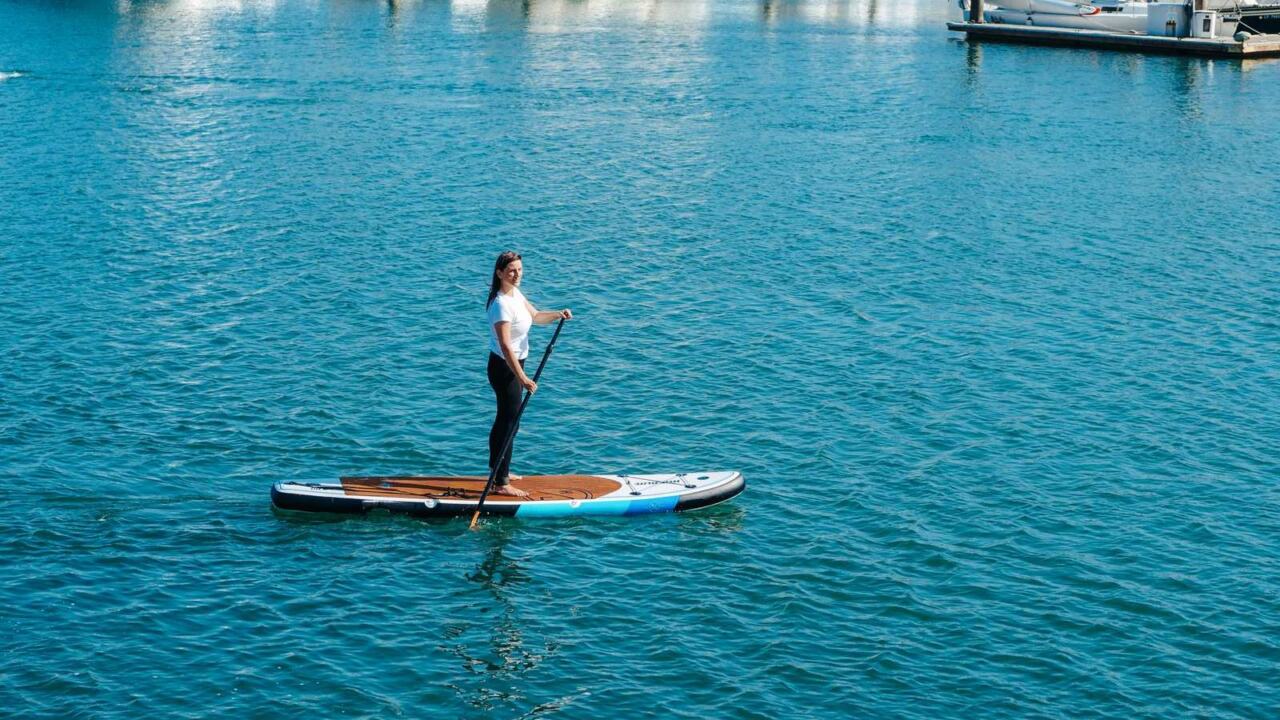
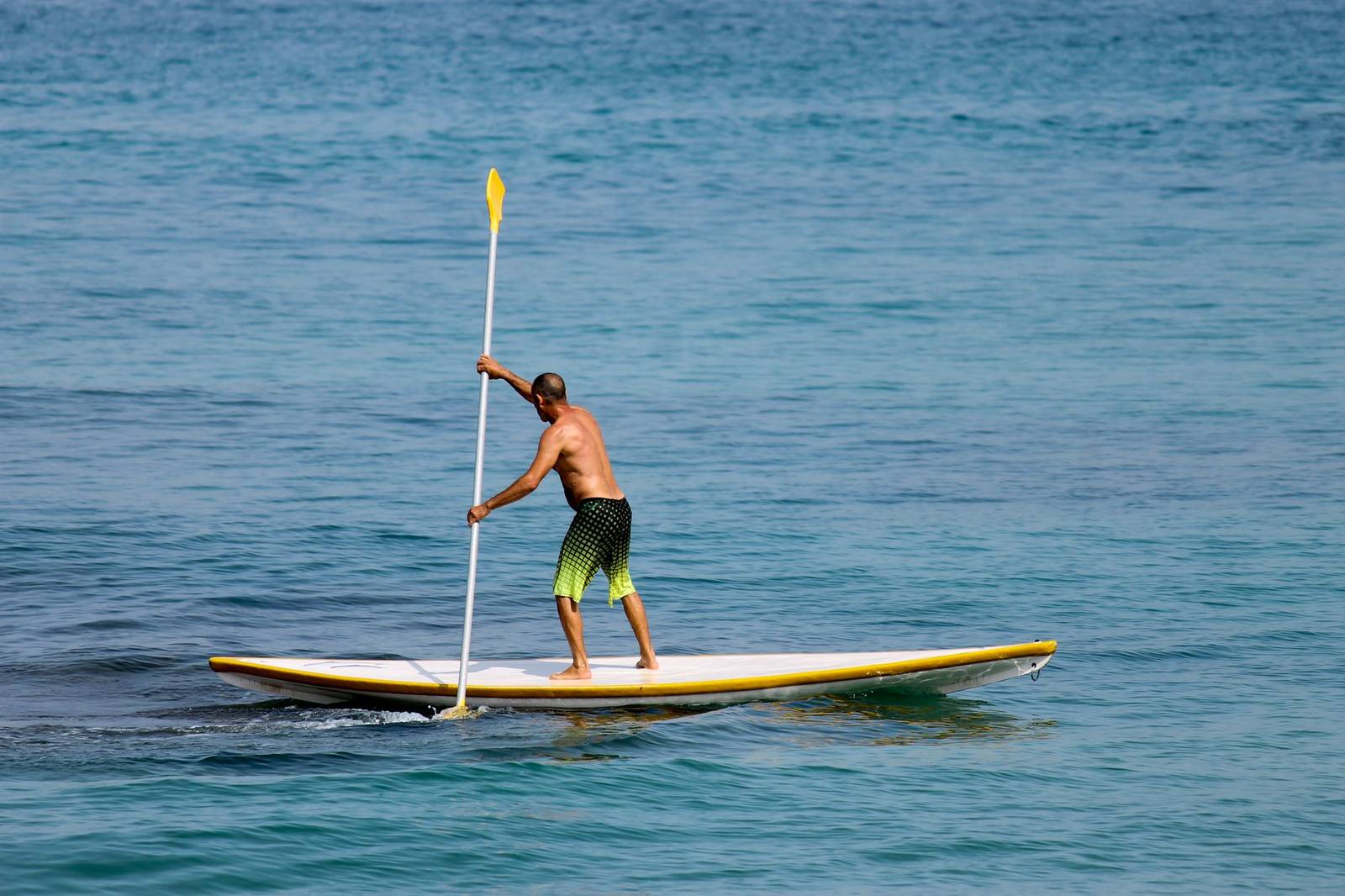
Stand up paddle boarding, usually shortened to SUP, has you stand on a board and push yourself along with a single-blade paddle. The Perfect Paddles guide says it originated in Hawaii and combines elements of both surfing and kayaking. Unlike on a kayak or a surfboard, you stay upright the whole time.
A board can be used on rivers, oceans, bays and marinas. People also use it for SUP surfing, SUP yoga, whitewater paddling and racing. For a first outing, a calm, sheltered spot is the sensible choice.
The same guide lists three reasons the sport has grown so popular:
- Social interaction: it works well as a group activity with friends.
- Physical fitness: it exercises multiple muscle groups.
- Nature connection: it gets you outdoors, enjoying the tranquility and beauty of the water.
Is stand up paddle boarding hard to learn?
At first glance it can look tricky, because it draws on balance, coordination, strength and awareness of the water. Even so, Perfect Paddles calls it very beginner friendly, especially with an instructor beside you.
According to the Perfect Paddles guide, a quick study can learn the basics in just a day or two. More challenging forms, such as SUP surfing and long-distance SUP touring, take more time and practice.
The guide suggests three things that help you succeed:
- Accept that you are entering an unfamiliar environment.
- Take your instructor’s guidance seriously.
- Bring decent balance and a willingness to put in a bit of effort.
Choosing a board and paddle
Most beginners start by renting. The guide says you will most likely rent a board from an outfitter near you, and the right board should match your size, the water you will paddle on and your skill level. As a beginner, the bigger board is easier to balance on.
Your paddle matters too. A quick length check takes under a minute:
- Stand upright and hold the paddle vertically with the blade touching the ground.
- Lift your dominant hand in the air.
- Adjust the paddle until the top of the handle lands right underneath your palm.
- On an adjustable paddle, press the metal button and slide the shaft until you hear a click.
Check that the grip feels comfortable and adjust again if it does not. The height can always be changed later as you improve.
Carrying a board takes a little getting used to. Hold the center handle to move it most efficiently, or carry it at your side, remembering that paddle boards are bigger than surfboards. Getting it to the water depends on the type of board:
- Inflatable board: deflate it and pack it into a SUP backpack in the trunk of your car.
- Hard board: use a car rack or another secure method and fix it on the roof with cam straps.
- Flying: deflate an inflatable and pack it in a backpack; protect a hard board in a durable case and research oversize baggage fees in advance.
At home, many people with hard boards store them on ceiling or wall racks. However you store yours, spread the board’s weight evenly so it is not damaged.
Safety gear every beginner needs
Bass Pro Shops’ SUP safety tips, posted March 31, 2026, put safety ahead of everything else. They apply whether you are just getting started or have years of experience. The essentials are simple and cheap compared with the risk they cover.
First, wear a leash. It keeps you connected to your board if you fall, and the Perfect Paddles guide points out that your board is the largest flotation device you have. Without a leash on a windy day, you can quickly become separated from it.
Bass Pro adds one exception: use a quick-release leash in rivers, surf or areas with obstacles, where being attached could become unsafe. Ask an instructor which type suits the place you plan to paddle.
Second, wear a life jacket, also called a PFD. Bass Pro recommends a properly fitted one every time you paddle, and says a Type III PFD is a great choice for paddleboarding. Even strong swimmers can get tired or face unexpected conditions.
The Perfect Paddles guide describes the US rules this way: the United States Coast Guard considers a paddle board a vessel and requires a life jacket on board or on the paddler in most instances. It adds that adults are not required to wear the PFD while paddling, but children must. Those are United States rules, so check what applies where you paddle.
Third, dress for the water temperature, not just the air. As the Bass Pro Shops guide puts it, cold water can be dangerous even on warm days, and if the water is 60°F or colder you should wear a wetsuit or other thermal protection.
Finally, be seen. Paddleboards sit low in the water and can be harder for boaters to spot, so bright or high-visibility clothing helps others see you.
Picking your water and planning the session
Conditions decide whether a first session is fun or stressful. If you are new, choose calm water with little wind. Avoid paddling when winds are blowing away from shore, as it may be difficult to return.
Keep watching as you paddle. Look out for boats, swimmers, tides and hidden obstacles below the surface, because wind, storms and changing water conditions can develop quickly.
Before you launch, run through this short routine:
- Review the weather and keep monitoring it while you are out.
- Tell someone where you are going and when you plan to return.
- Bring a way to call for help.
- Invite a friend along if you can.
On communication, keep your phone in a waterproof pouch but do not rely on it alone. A handheld VHF marine radio can be a more reliable option on the water.
Paddling with a partner is safer and more enjoyable, since someone is nearby to help if an issue comes up. Even experienced paddlers benefit from company on the water.
Finally, consider a lesson. Taking a class can help you build confidence and improve your skills, and learning proper technique and safety basics reduces risk on the water.
Where to go next
Once you feel steady on a board, you may want to try something with more speed or surf. If riding waves lying down appeals to you, read about bodyboarding for beginners.
If you would rather harness the wind, there is a separate guide to kitesurfing for beginners. Either way, the habits from this guide carry over: check conditions, wear the right gear and never go out without telling someone.
Frequently asked questions
Do I need a leash for stand up paddle boarding?
Show answer
The Perfect Paddles guide says it is always important to wear a leash and stay attached to your board. In rivers, surf or areas with obstacles, Bass Pro advises a quick-release leash.
Do I have to wear a life jacket?
Show answer
Bass Pro recommends wearing a properly fitted life jacket every time you paddle. Perfect Paddles describes US Coast Guard rules that require one on board or worn in most instances, with children required to wear it. Rules differ by place, so check the ones where you paddle.
How long does it take to learn?
Show answer
Perfect Paddles says a quick study can learn the basics in just a day or two. Harder forms such as SUP surfing and long-distance touring take longer.
What kind of board should a beginner choose?
Show answer
The board should match your size, the water you will paddle on and your skill level. As a beginner, a bigger board is easier to balance on, and an instructor can advise you.
Is it safe to paddle alone?
Show answer
Bass Pro says paddling with a friend is safer and more enjoyable. If you do go out, tell someone where you are going and when you plan to return.