Looking into bodyboarding for beginners and not sure what to buy or where to start? Keep it simple: a bodyboard, swim fins and, in cooler water, a wetsuit, then a calm, patrolled beach to learn on.
Bodyboarding is one of the most approachable options in water sports, because you lie on the board instead of standing on it.
| Item | Value |
|---|---|
| Bodyboarding categories in one UK retailer’s range | 4 (bodyboards, swim fins, accessories, rash vests) |
| Wetsuit thicknesses listed in that retailer’s menu | 3/2mm, 4/3mm and 5/4mm |
| Cold-water wetsuit add-ons listed | 3 types (boots, gloves, hoods) |
| Beach extras listed under surf accessories | Rash vests, changing robes, towels, sun block/UV protection, ear plugs |
These figures come from the product menu of the UK retailer Wetsuit Centre, used here only as a neutral example. Shop ranges change, so check the source before you rely on them; this site is independent and not affiliated with that retailer.
What bodyboarding is and why beginners like it
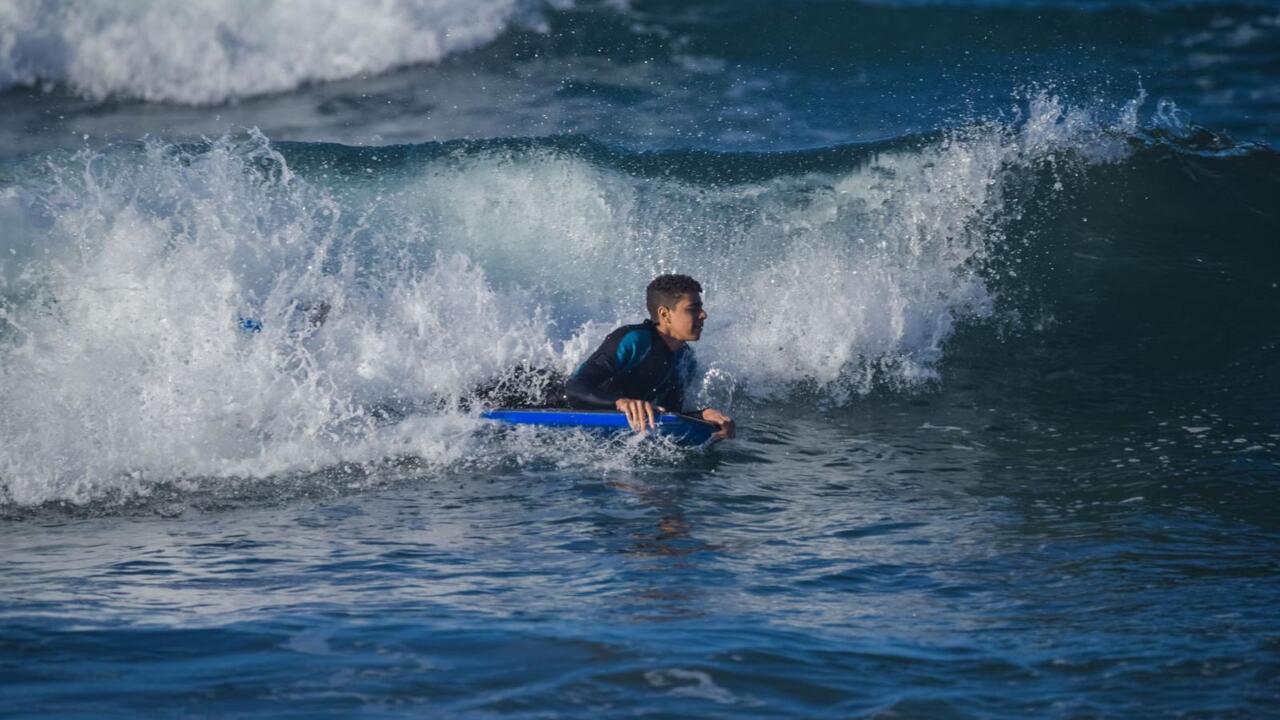
In bodyboarding you ride a short, soft board while lying down, usually with swim fins on your feet. That low position makes it easier to feel what the wave is doing than it is on a standing board.
It also keeps the entry cost and the learning curve modest. You do not need to master a pop-up, so your first sessions can focus on the basics: reading the water, kicking, and catching small whitewater.
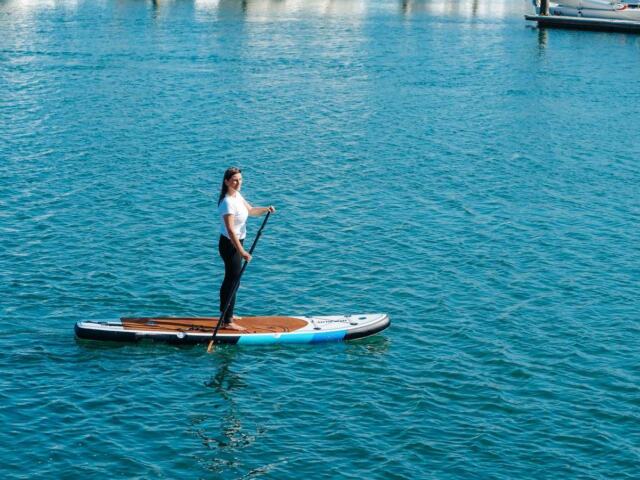
If you later want something different, stand up paddle boarding for beginners is a calmer, upright alternative to try on flat water.
What gear do you need to start?
The retailer’s bodyboarding range is split into four groups: bodyboards, swim fins, accessories and rash vests. That split is a handy checklist for a first kit.
- Bodyboard: the board itself. The same retailer also lists bodyboards inside its wider surfboard menu, so look in both places when you shop.
- Swim fins: short fins made for bodyboarding, which help you kick into waves.
- Rash vest: a snug top that can reduce chafing from the board and sun.
- Accessories: small items that make a session easier, such as sun protection and a towel or changing robe.
Try fins on before you buy. They should be snug enough to stay on in the water without cramping your feet.
Wetsuits and extras for cooler water
If the sea is cold where you live, a wetsuit is what keeps a session fun rather than short. The retailer’s menu lists wetsuits in 3/2mm, 4/3mm and 5/4mm thicknesses, plus summer, shorty and spring and autumn styles.
Which one suits you depends on your local water temperature and how quickly you feel the cold. Check the maker’s sizing and temperature guidance, and ask the shop or a local bodyboarder if you are unsure.
For the coldest days the same menu lists boots, gloves and hoods as separate accessories. Beginners often spend a lot of time sitting in the water, so staying warm matters more than it seems on the beach.
Choosing a beach and reading the conditions
Your first aim is a beach where the waves are small and the water is shallow enough to stand in. A beach with lifeguards is better still, because you can ask them about the day’s hazards before you get in.
Look at the water for a few minutes first. Notice where the waves break, where other people are swimming, and whether any flags or signs are posted.
Currents are the main thing to understand before you paddle out. Read up on how to escape a rip current before your first session so you know what to do if one pulls you away from the shore.
Your first session, step by step
Keep the first session short and simple. The aim is to get comfortable, not to ride a perfect wave.
Before you leave the beach towel, agree a plan with whoever is with you. Tell them roughly where you will be in the water and when you expect to come out, so that someone is watching if things change. A simple plan costs nothing and makes the whole session calmer.
- Check the conditions and speak to a lifeguard if one is on duty.
- Put on your fins and rash vest, and wet your wetsuit if you wear one so it settles into place.
- Wade out with the board beside you, and stay where you can stand.
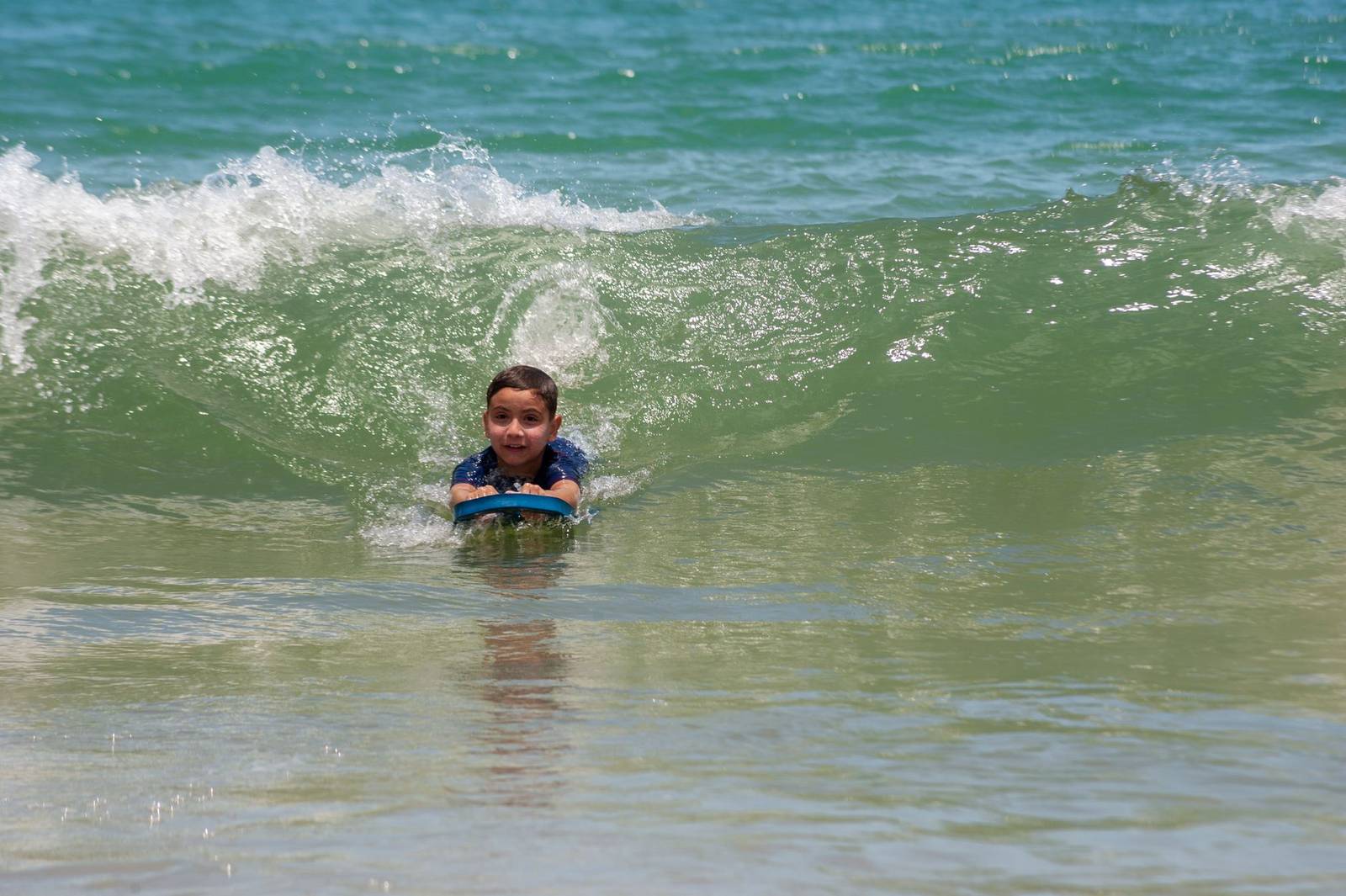
- Turn to face the beach, lie on the board and let a small wave reach you.
- Kick steadily as the wave lifts the tail, then stay low and ride the whitewater in.
- Repeat, and move a little further out only when the shallow water feels easy.
Rest when you are tired. A tired swimmer in the surf is a risk, so head in before you are worn out.
Positioning matters more than power. Keep your chest over the middle of the board and your hips towards the tail, so the nose does not dig in. Resting your hands on the top corners of the board gives you a stable body position as the wave lifts you.
Your kick does most of the work at the start of a wave. Begin kicking as the wave approaches rather than after it has already passed you, and keep going until you feel the board being carried forward. Good timing comes from watching waves, so spend some time simply observing how they build and break.
After each ride, take a moment to review it. Ask yourself whether you were too far in, too far out, or too slow to start kicking, and adjust on the next wave. Small, repeatable adjustments teach you faster than big changes.
Share the water considerately. Give other surfers and swimmers plenty of space, and do not ride a wave straight towards someone in front of you. Good etiquette keeps everyone safer and makes the beach more welcoming.
Look after your gear as well as yourself. Rinse your board, fins and wetsuit in fresh water when you get home, and let them dry in the shade rather than in direct sun. Following the maker’s care instructions is the simplest way to make a first kit last.
Common beginner mistakes
- Choosing waves that are too big for your swimming and fitness.
- Skipping the warm-up and getting tired quickly.
- Buying a wetsuit that is the wrong fit, which lets cold water in.
- Forgetting sun protection on bright days.
- Staying in the water after you start to feel cold or tired.
- Paddling out near other people without watching where they are heading.
Frequently asked questions
Is bodyboarding good for complete beginners?
Show answer
Yes, many people find it a gentle way into wave riding because you lie down and do not have to stand up. You still need to be a confident swimmer and to respect the conditions.
Do I need fins to bodyboard?
Show answer
Swim fins are part of the retailer’s bodyboarding range, and they help you kick into waves. Most beginners find them useful, so plan to include them in your first kit.
Do I need a wetsuit?
Show answer
It depends on your water temperature. In warm water a rash vest may be enough, while in cooler water the retailer’s menu shows wetsuits in 3/2mm, 4/3mm and 5/4mm thicknesses.
Where should I practise?
Show answer
Choose a patrolled beach with small waves and water you can stand in. Ask the lifeguards about hazards before you enter the water.