
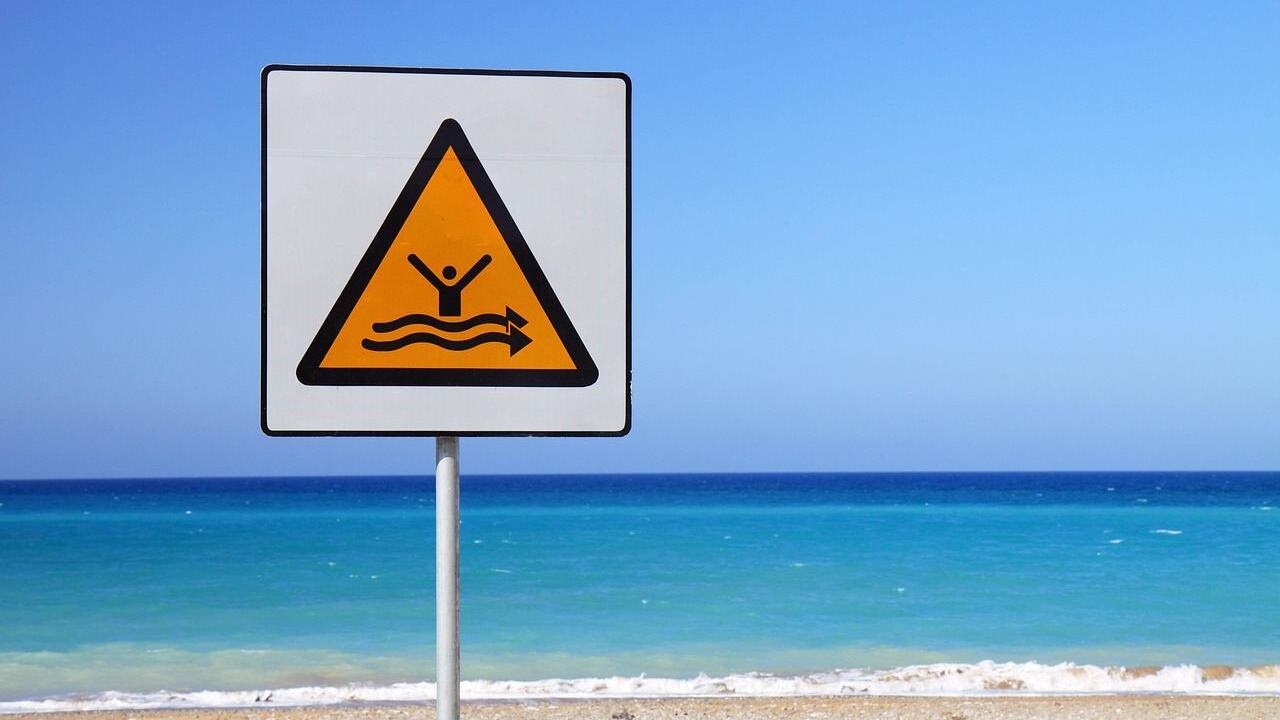
Caught in a current that is dragging you away from shore? To learn how to escape a rip current, stay calm, don’t swim against it, and swim along the shoreline until you’re free.
This guide sits within the site’s water sports coverage.
| Key fact | Value |
|---|---|
| Average rip current speed | 1-2 feet per second |
| Fastest measured rip current speed | 8 feet per second |
| Chance of drowning at a beach with lifeguards | 1 in 18 million |
| Where a rip current pulls you | Away from shore, not under the water |
| Number to call for help without a lifeguard (US) | 911 |
These figures come from the National Weather Service rip current survival page and its rip current safety news item. Figures can change, so check the source before you rely on them.
What a rip current is and where it forms
A rip current is a channelized current of water flowing away from shore at beaches. It is not a wave and it is not a tide. It is a narrow stream of water heading out to sea.
Rip currents typically form at breaks in sandbars, and also near structures such as jetties and piers. They are common and can be found on most surf beaches, including the Great Lakes, according to the National Weather Service.
The pull is faster than many people expect. The average speed is 1-2 feet per second, but a rip current has been measured at 8 feet per second, which is faster than an Olympic swimmer, per the same NWS page. That is why trying to out-swim it is a losing plan.
One small point of language: the National Weather Service says “rip current” is the correct term, not “rip tide”. Its news item points to a fact sheet that explains why.
How to spot a rip current before you swim
The best escape is never getting caught, and that starts with reading the water. NOAA lists several visual clues, relayed in a WHYY guide:
- A channel of churning, choppy water.
- An area having a notable difference in water color.
- A line of foam, seaweed, or debris moving steadily seaward.
- A break in the incoming wave pattern.
Look from the beach for a few minutes before you wade in. A gap in the breaking waves between rougher sections is a sign to pick another spot.
Check the forecast too. The National Weather Service advises checking your local surf zone and beach hazards forecasts before you leave for the beach. Conditions can change during the day, so look again for updates.
How to escape a rip current, step by step
If you feel yourself being pulled out, the first move is mental. Rip currents pull you away from shore, they don’t pull you under the water, so you have time to think.
- Stay calm and do not panic. Panic burns the energy you need.
- Do not fight the current. Swimming straight back against it only exhausts you.
- Swim along the shoreline until you escape the current’s pull. The NWS also says you may swim toward breaking waves.
- When you are free of the current, swim at an angle away from the current toward shore.
- If you cannot escape by swimming, float or tread water, then signal for help.
Your instinct will be to head straight for the sand. The National Weather Service is blunt about this: do not try to swim directly into shore.
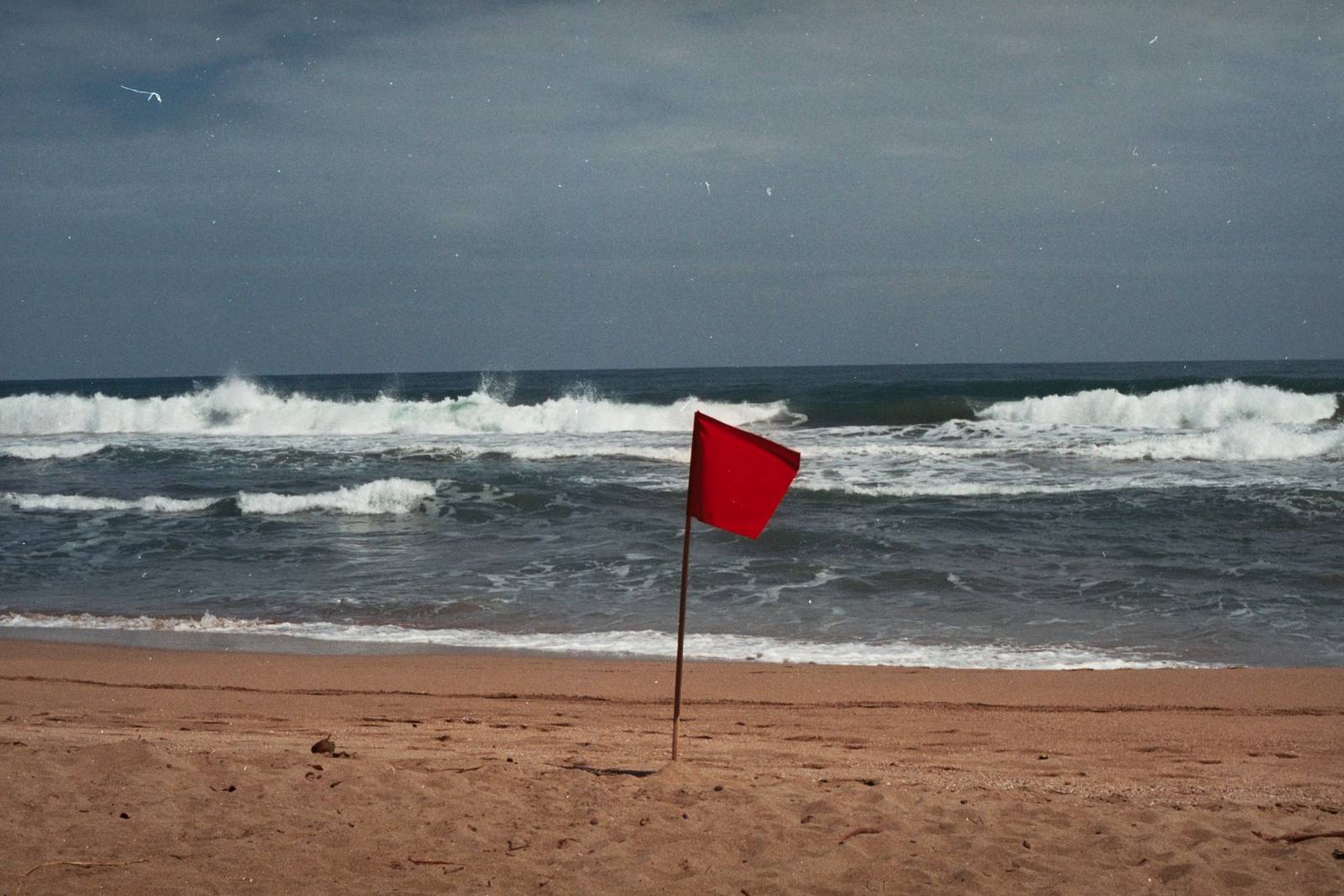
Think of it as stepping sideways off a moving walkway. Once you are out of the stream, the way back to shore is much easier. The steps above follow the NOAA advice relayed by WHYY.
If you cannot reach shore: float and signal
Sometimes you are tired before you are free. The NWS says the best way to survive is to first relax and float, then swim out of the current if you feel you safely can.
If you feel you will be unable to reach shore at any time, draw attention to yourself. Face the shore, wave your arms, and yell for help, according to the NWS.
When the current weakens, swim at an angle away from the current toward shore. Floating or treading water buys you time without wasting strength.
Helping someone else without becoming a victim
Seeing a swimmer in trouble makes you want to dive in. Don’t. The National Weather Service warns that many people have died trying to rescue rip current victims.
Use this order instead:
- Get a lifeguard.
- If no lifeguard is present, call 911.
- Direct the swimmer to swim following the shoreline to escape.
- If possible, throw the person something that floats.
- Never enter the water without a flotation device.
Your role is to get trained help moving and give clear directions from dry land.
Staying safe before you enter the water
Where you swim matters. The NWS says that if at all possible you should only swim at beaches with lifeguards, because the chances of drowning at a beach with lifeguards are 1 in 18 million, a figure it attributes to the U.S. Lifesaving Association (source).
Ask the lifeguards about rip currents when you arrive. Read the beach safety signs and look for warning flags, but remember that flags aren’t used in all areas and their meaning can vary from area to area.
A few habits cover most of the rest:
- If you choose a beach without a lifeguard, never swim alone.
- Make sure someone in your group has a phone to call 911.
- Keep small children within arm’s reach at all times.
- Consider swimming lessons: many programs now offer lessons in how to escape a rip current.
If you plan to surf, the wetsuit thickness guide helps you choose gear for the water you will be in. If you are new to riding waves, read bodyboarding for beginners and learn the escape steps above before you paddle out.
This page is general education from an independent site. It does not replace the instructions of a lifeguard or emergency services.
Frequently asked questions
Can a rip current pull you under the water?
Show answer
No. The National Weather Service says rip currents pull you away from the shore, not under the water. The danger is exhaustion from fighting the current.
Should you swim straight back to shore?
Show answer
No. The NWS says not to swim directly into shore. Swim along the shoreline until you escape the pull, then angle toward the beach.
Is a rip tide the same as a rip current?
Show answer
The National Weather Service says “rip current” is the correct term, not “rip tide”. Use that term when you talk to lifeguards or read forecasts.
Do rip currents only happen in the ocean?
Show answer
No. The NWS says they are common on most surf beaches, including the Great Lakes. Wherever waves break, check for the warning signs.