Stuck lying down while the wave rolls past? Here is how to pop up on a surfboard: hands by your ribs, press up, bring your feet through, and stand in one smooth motion.
This page is part of our surfing guides and covers the move that links paddling to riding.
| Item | Value |
|---|---|
| Target time for the whole pop up | Roughly one second |
| Land practice before a surf session | 20-30 pop ups |
| Ready for unbroken waves | 8 out of 10 whitewater pop ups |
| Board nose height while paddling | About two to three inches above the water line |
| Weight on the front foot (one coach’s method) | About sixty percent of body weight |
These figures come from a surf-camp lesson page and a surf-school technique article. They can change as coaches update their advice, so check the source before you rely on them.
Set up before the wave arrives
The pop up does not start with your hands. Where you lie on the board decides whether the rest of the move can work, and one surf-camp lesson says to lie centred with the nose about two to three inches above the water line.
If the nose is buried you are too far forward, and if too much nose is showing you are too far back. Use this checklist to hold a stable prone position:
- Keep your feet together with your toes touching the tail of the board.
- Arch your back slightly and lift your head to look toward the horizon.
- Engage your core so you do not rock from side to side.
A longer board makes all of this easier at first, as a surf-school article points out for beginners. If you are still choosing equipment, our guide on how to choose a surfboard is a good place to start.
Speed is the other half of the setup, because without it the wave passes under you and there is nothing to pop up on. Our guide on how to paddle on a surfboard covers the stroke itself. Once you feel the wave take over and the board glide on its own, that is your signal to start the pop up.
The pop up, step by step
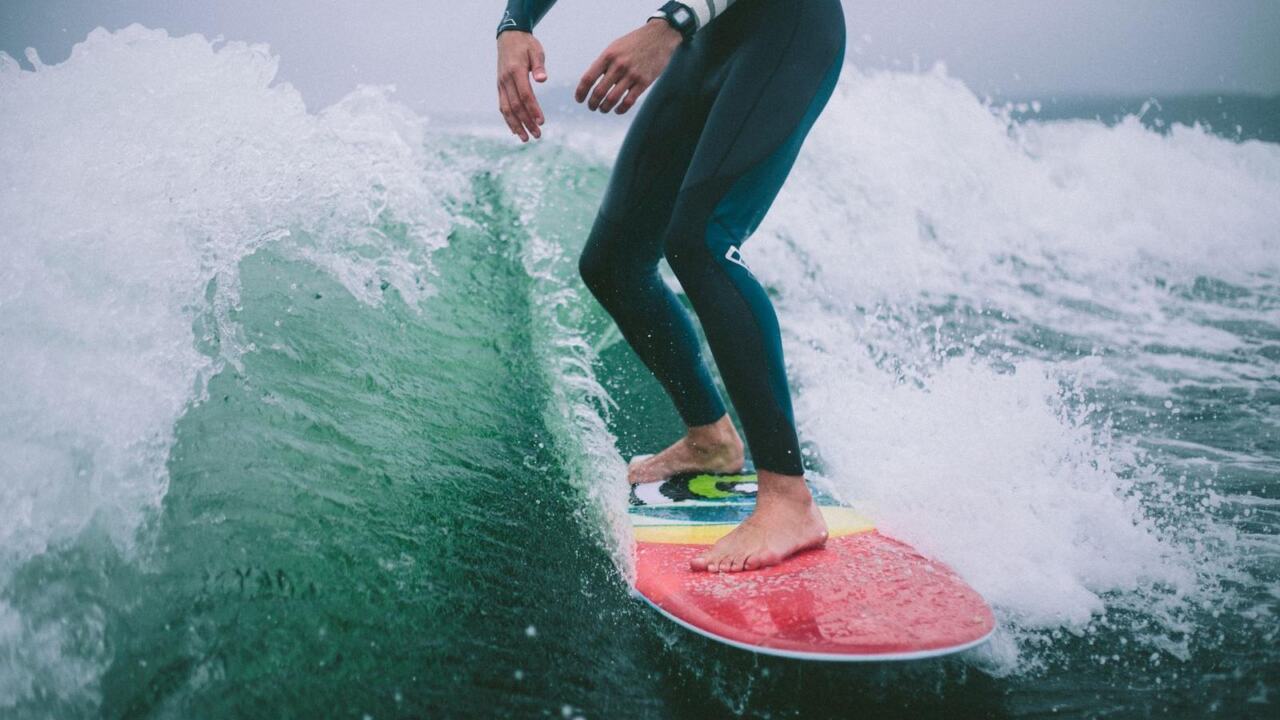
Think of the pop up as one fluid burst. Coaches teach it in checkpoints, but the goal is to blend them into a single motion that takes roughly one second.
- Hands down. Place your hands flat on the deck beside your lower ribs, roughly where you would put them for a push-up. Do not grab the rails.
- Press up. Straighten your arms fully. Keep your chest high and your back arched while your hips stay low.
- Bring the back leg through. Move your back foot or knee forward under you, in line with the centre of the board.
- Front foot to your hands. Your front foot lands where your hands were, between your ribs and hips.
- Hands off. Release the deck and stand tall through your chest, with your knees still bent.
- Eyes up. Look ahead toward the beach and let the board glide.
The front foot is where many beginners go wrong. The lesson page says it must land exactly where your hands were, between your ribs and hips.
Coaches differ on the details. One surf-school method uses about sixty percent of your body weight on the front foot for momentum and stability, with your hands staying down beside it until you stand.
Rotating your hips matters too. One surf-shop guide warns that without it you end up in a stance like riding snow skis, and you cannot balance that way on a moving board.
Common mistakes and how to fix them
Most pop-up problems come from a small handful of habits. Check yourself against this list:
- Looking down. One lesson page calls looking at your feet the most common beginner mistake. Keep your eyes fixed on the beach ahead.
- Grabbing the rails. Gripping them locks your wrists at an angle that makes everything after it harder and slower.
- Jumping. One guide says a jump jolts the board and can slow it enough to stop your ride, with no guarantee where your feet land.
- Kneeling first. The same guide says to go straight to your feet, and notes that kneeling often happens when you push with forearms and elbows instead of your hands on the deck.
- Stiff, straight legs. Keep your knees bent once you are standing so you can absorb the movement of the board.
- Starting too early or too late. Wait until the wave has taken over and the board is gliding, then go.
On kneeling, sources do not fully agree. The surf-school article says its coach encourages a knee method for people with less ability to balance on the board, while the surf-shop guide above rejects it. If you are wobbly, a knee step can be a stepping stone, but aim to go straight to your feet.
Practise the pop up on land
You do not need a beach to improve. A beach-hotel guide says you can learn and improve your technique on dry land, on a mat or even your living room floor.
The surf-camp lesson suggests 20-30 pop ups on land every day before your session to build muscle memory. Go slowly at first. The surf-shop guide advises speeding up only once the move is smooth and you no longer have to think about it.
Try these drills, all taken from the exercise list on the same surf-camp lesson page:
- The basic pop-up drill: 20-30 reps, as listed on the lesson page.
- The slow-motion walkthrough: 5-10 reps, pausing at each checkpoint.
- Burpee-to-surf-stance: 3 sets of 10.
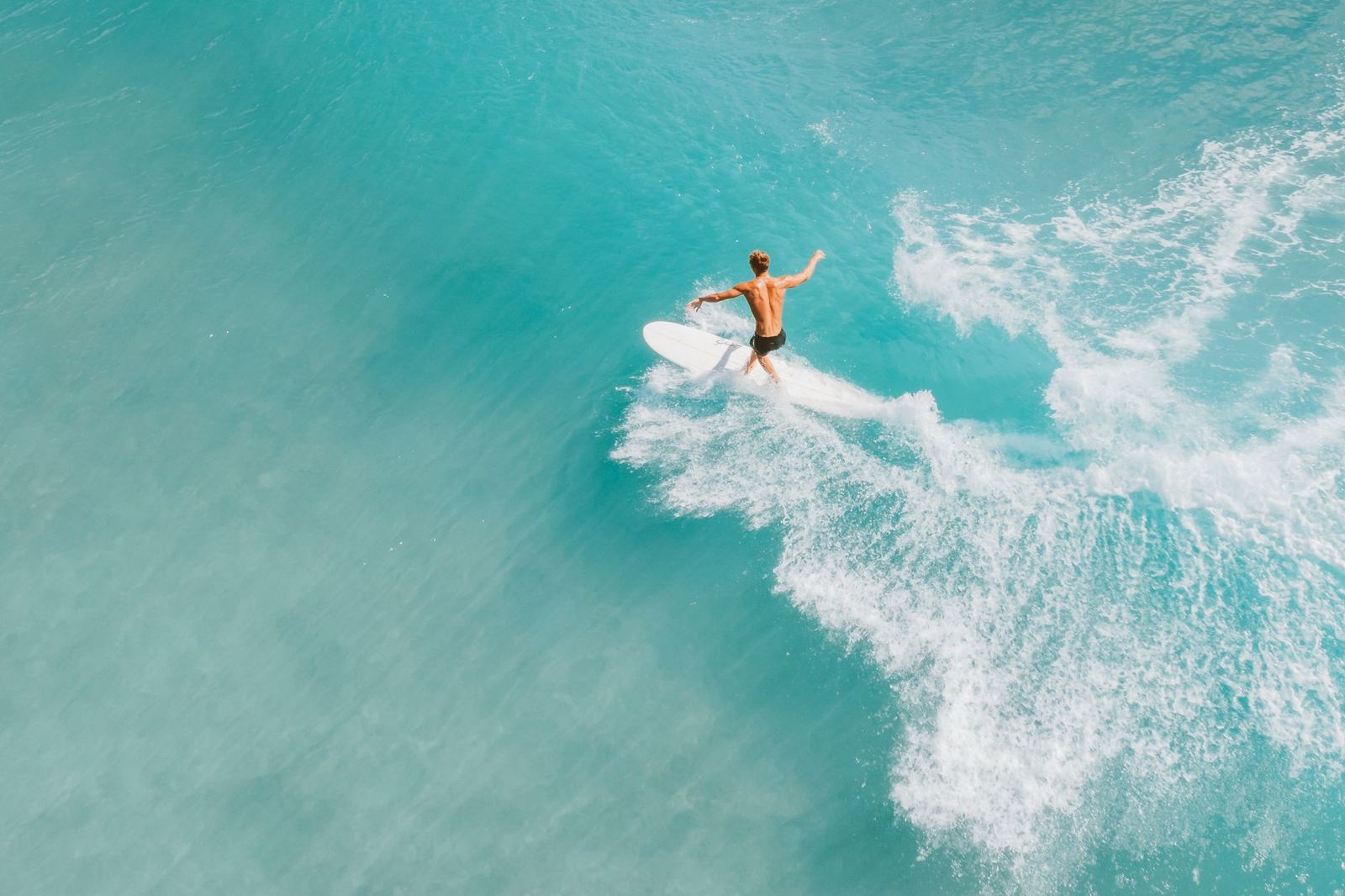
When are you ready for unbroken waves?
Start in the whitewater, where the wave pushes you straight toward the beach. The lesson page says that once you can pop up confidently in whitewater 8 out of 10 times, you are ready to paddle for unbroken waves.
In the whitewater, one guide suggests standing further up the board so you glide all the way to the beach. Standing with a foot toward the tail comes later, on green waves.
Until then, keep your consistency as the goal rather than speed. A smooth, repeatable pop up beats a fast one that lands your feet in a different place each time.
Frequently asked questions
Should I go to my knees first?
Show answer
One surf-shop guide says no: go straight to your feet, because kneeling builds a habit you will need to undo. Another school article offers a knee method for people with less balance, so treat it as a temporary aid.
Where should I look when I stand up?
Show answer
Look out in front toward where you are going. The guide says looking down at the board or at the wave dramatically affects your balance.
How fast should a pop up be?
Show answer
Aim for smooth first. The lesson page describes the finished move as a single burst of roughly one second.
Can I practise without a surfboard?
Show answer
Yes. One guide says no beach or board is required, and you can drill the move on a yoga mat or the floor at home.