| Surfer level | Board volume rule (litres, from body weight in kg) | Planning use |
|---|---|---|
| Learner | Body weight ÷ 1.75 | Use this as the starting figure when shopping for or renting a first board. |
| Intermediate | Body weight ÷ 2 to 2.25, depending on ability | Apply it only once waves are being caught and ridden reliably. |
| First shortboard | Body weight ÷ 2.25 to 2.5 | Treat it as the guide for a first step down in volume, not as a beginner target. |
| Advanced | Body weight ÷ 2.75 | Reference only. It describes experienced surfers, not people learning. |
These volume rules are the divisions published by the board maker ND Surfboards. They are rules of thumb for choosing a board, not fixed standards.
Surf for beginners works best when three choices line up: a board with enough volume, waves that match your level, and a patient plan for the conditions you actually have.
This guide is the starting point for the Surfing section. For the sequence of actions on the sand and in the water, read how to surf for beginners, then return here to choose gear, spots and next steps.
Starting as an adult beginner
An adult beginner learns to surf by combining a basic level of fitness, supervised practice and carefully chosen small waves. Adults usually do not need to hurry. The sensible order is to prepare the body, learn the fundamentals with someone who can watch you, and only then spend time on your own in the water.
Build a base before the first session
Surfing asks for paddling stamina, shoulder mobility and a stable core. A beginner who arrives with those basics spends more of each session practising and less of it resting on the board. The guide to exercises for surfing covers the movements that help most. Treat them as a habit you build over weeks, not a crash course in the days before a trip.
Flexibility and breath control matter as much as strength. Falling is part of every session, and a relaxed body handles it better than a tense one. If you have an injury or a health condition, check with a doctor before starting a new physical activity.
Lessons, camps and supervised practice
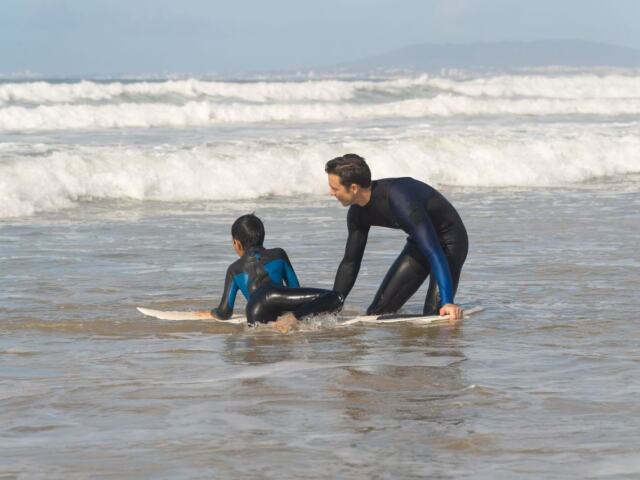
A lesson shortens the learning curve because an instructor can correct small errors before they become habits. Beginners tend to need feedback on how they lie on the board, where they place their hands and when they stand. These details are hard to judge from the inside. Foam-topped boards, calm conditions and a clear safety briefing are the usual features of a good first session.
If you want an intensive block of coaching, a surf camp for beginners bundles daily lessons with time to practise between them. That suits adults with a holiday window who want repetition. Weekly lessons suit those who prefer to build slowly around work and family.
Choosing waves that suit your level
The surf-school Unity Surf puts the principle simply in its etiquette guidance: choose waves that match your skill level, and over time you will be able to tackle bigger ones. For a beginner this means small, gentle, broken waves close to shore, not the tall, steep waves that experienced surfers wait for further out.
The reasoning is practical as well as polite. A wave beyond your ability leads to wipeouts and can put you in the path of other surfers. Small waves give more repetitions, and repetitions are what build skill.
Choosing a surfboard
The best surfboard for a beginner is the one with enough volume to float the surfer comfortably and a shape that forgives mistakes. Volume is the number that links body weight to board size, and it is the most useful single figure on a beginner’s shopping list.
Volume as the starting point
The rule published by ND Surfboards tells a learner to divide body weight in kilograms by 1.75 to get a target in litres. The same source gives lower divisors for stronger surfers, which means smaller boards: 2 to 2.25 for intermediates, 2.25 to 2.5 for a first shortboard and 2.75 for advanced surfers. Notice that a larger divisor produces a smaller board. A beginner who borrows an advanced surfer’s board is choosing a board that is too small to float and paddle well.
Length alone says little. The same source notes that a performance shortboard of 6 ft might hold about 28 litres, while a 6 ft shortboard designed for small, mushy surf might hold more like 34 litres. Two boards of the same length can therefore behave very differently. Always check the volume figure, not just the length.
Soft-tops, longboards and shortboards
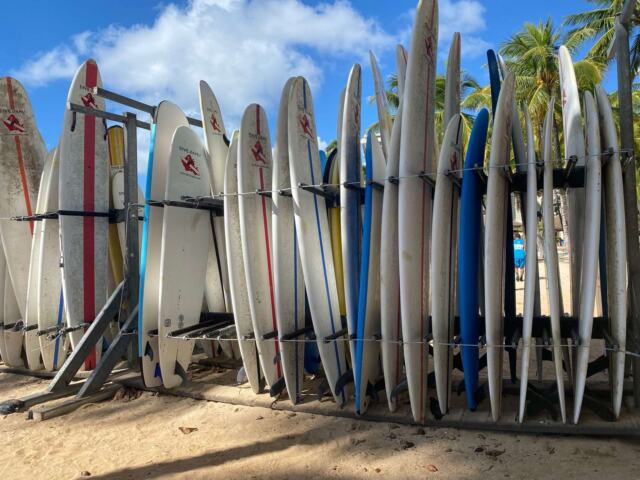
The types of surfboards guide explains the families in detail. For planning purposes, beginners do best on boards that are wide, thick and buoyant, because they paddle easily and stay stable while you learn to stand. Foam soft-tops are a common choice in lessons because they are forgiving when a board strikes a surfer, while longboards have the length and float that make small waves easy to catch.
A shortboard is built for manoeuvres that a beginner cannot yet perform. Starting on one usually means more time sinking, less time riding and slower progress. For a ranked comparison of specific models and sizes, the guide to the best beginner surfboard goes further.
Buy, rent or borrow
Renting suits the first sessions, because your needs change quickly once you can stand up and ride. Buying makes sense after you have found the volume and shape range that works for you, and that usually comes from a handful of lessons or a camp. Second-hand boards are an option for cost-conscious adults, but a beginner is better served by a board that matches the volume rule than by a bargain that is too small.
Surf breaks and Mediterranean conditions
A surf break is a place where waves reliably break in a rideable way, whether over sand, rock or reef. Beach breaks over sand are the usual choice for beginners because the bottom is soft and the waves break in many places along the shore. Rocky or reef-backed breaks bring hazards that a learner is better off avoiding.
Short, inconsistent swell in Italy
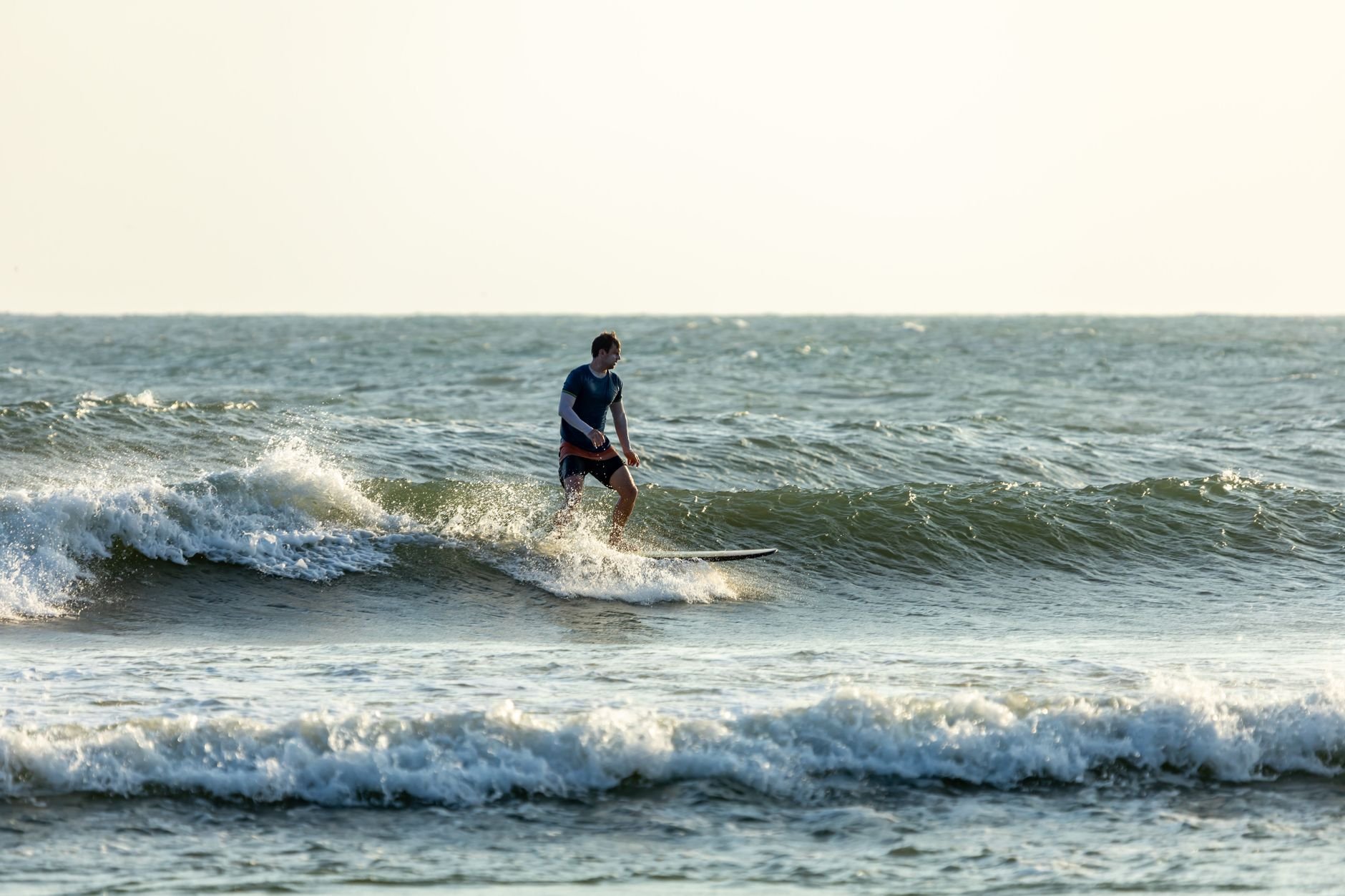
Most English-language surf guides are written for oceans, where long-travelled swell arrives in regular sets. Surf in Italy and the wider Mediterranean follows a different pattern, with short, inconsistent swell. Days can be completely flat, and when waves do arrive they may be short-lived and choppy. That changes how an adult beginner should plan.
- Plan around the forecast. Check conditions before travelling to the beach, and learn the basics in the guide on how to read surf forecast data. On a flat day, spend the time on fitness or a lesson on the sand.
- Accept smaller, softer surf. Small waves are the realistic norm, and they suit learning. The ND Surfboards example of a 6 ft shortboard built for small, mushy surf at about 34 litres shows how boards are designed with that kind of wave in mind.
- Keep expectations flexible. A short trip may hold few surfable days, so adults on holiday are better served by a lesson-based plan than a plan that depends on swell.
For a regional overview, read surfing in the mediterranean, which develops these ideas for Italian coasts and nearby seas.

Reading a break before you paddle out
Spend time on the beach watching before getting in. Look at where waves start to break, where surfers sit, and where the water appears to flow back out to sea. Watching a break for a while shows how the waves behave and which parts suit your level. If the surf looks bigger or rougher than the guidance above suggests for your level, wait for another day or move to a gentler stretch of beach.
Rocks and other hazards
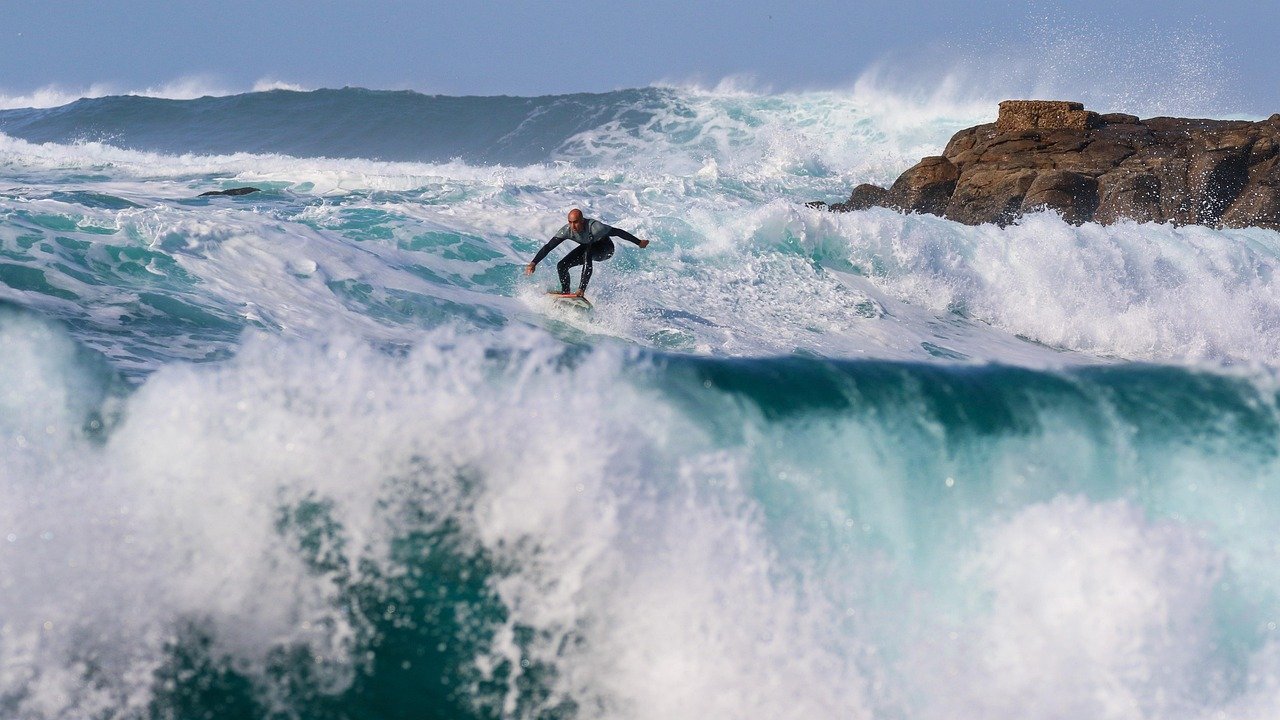
Rock and reef near the waves are the clearest hazards. A break beside a headland can look photogenic, but it leaves little margin for a fall or a loose board. Beginners should choose open, sandy stretches and keep clear of rocks, piers and anyone else in the water.
The lineup and surf etiquette
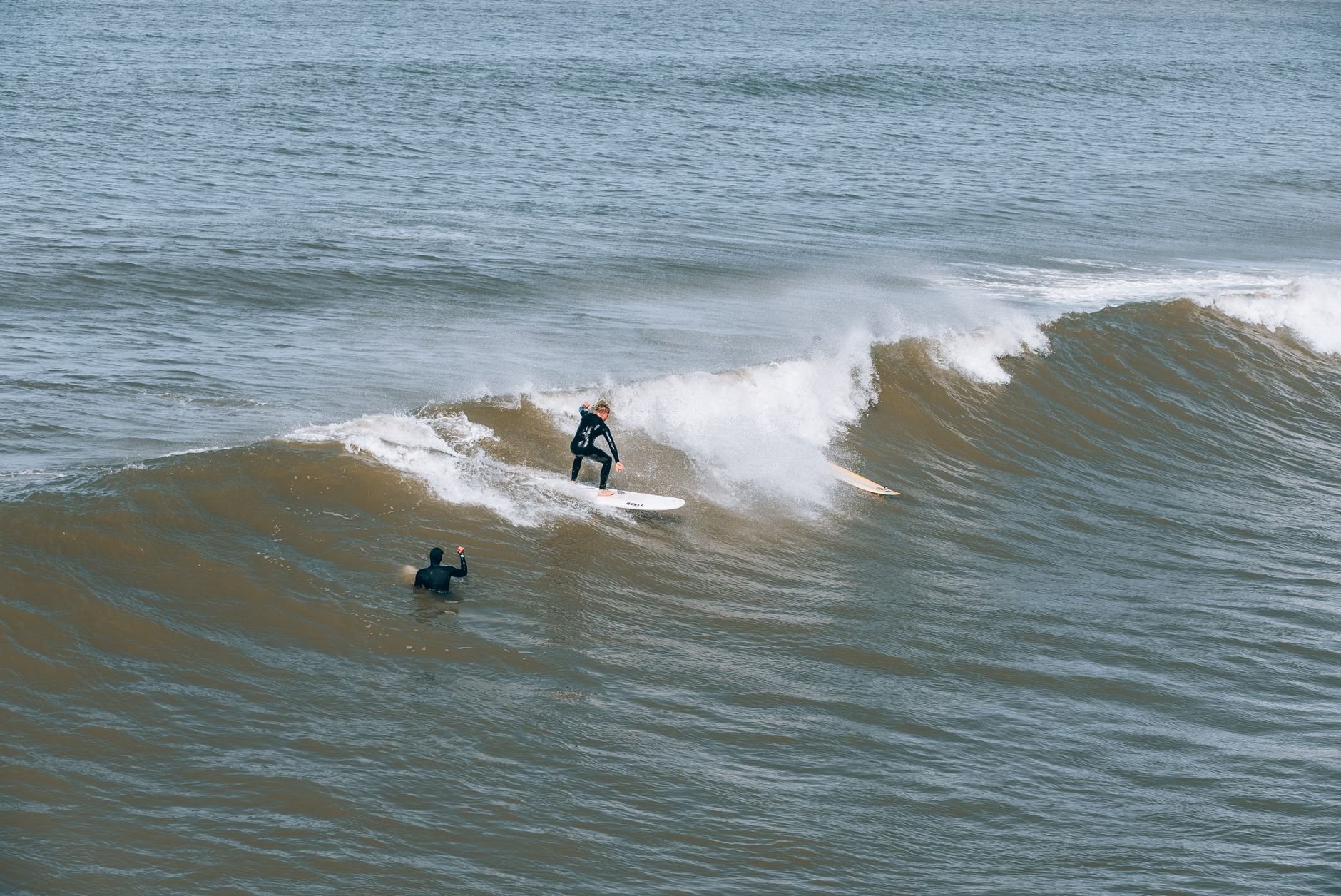
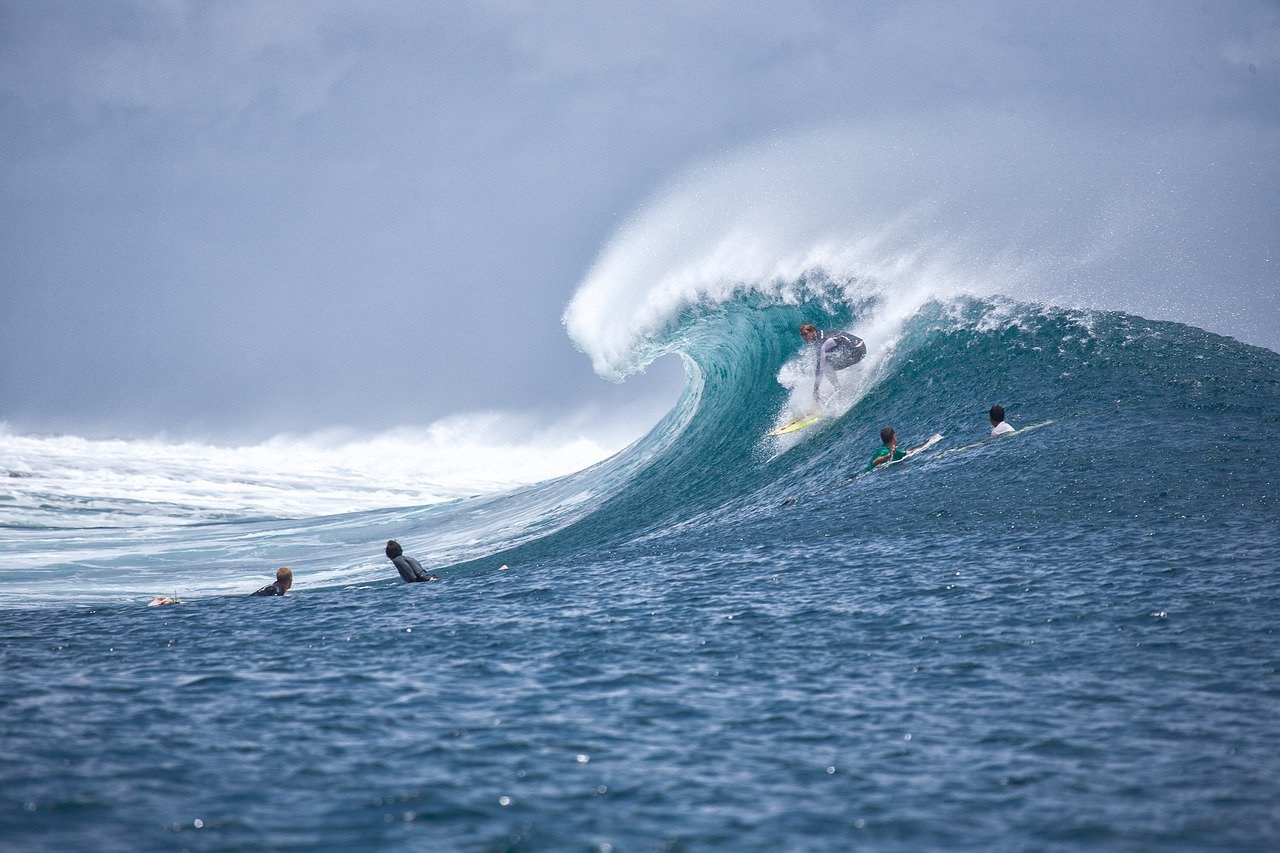
The lineup is the area just beyond the breaking waves where surfers wait for their turn. It works only if everyone follows the same priorities. Unity Surf’s guidance on etiquette gives the main rule: the surfer closest to the peak of the wave has the right of way. Dropping in on someone who already has the wave is the clearest breach, and it is also dangerous.
The same source stresses control of your board. A board that you let go of can become a dangerous projectile in the water, so hold on to it when a wave arrives, especially when others are close by. For the complete set of unwritten and written rules, see surf etiquette.
For a beginner, etiquette has a practical side as well. Stay out of the main takeoff zone, paddle around the lineup instead of through it, and share the beach with learners at your own level. A crowded peak is not a good place to practise.
Core skills in the water
Four skills carry most of the early learning: paddling, standing up, steering and getting out through waves. Each can be practised in small waves, and each has its own guide.
Paddling
Paddling gets you into position and gets you moving fast enough to catch a wave. Good technique saves energy, which matters for adults who tire before they have stood on a wave. The guide to surf paddling technique covers body position on the board and the stroke itself.
Standing up and choosing a stance
The pop-up is the move from lying to standing in one smooth motion. It is easier to learn on the sand first and then to try in whitewater. Read how to pop up on a surfboard to break the movement into parts. Your natural foot-forward position decides your stance, and the guide on regular vs goofy stance shows how to find it without guessing.

Turning and getting out
Once you can ride straight toward the beach, turning lets you stay on the wave longer. How to turn on a surfboard explains the weight shifts involved. Getting back out through breaking waves is just as important, and it separates a tiring session from a productive one. The guide on how to duck dive also covers the turtle roll, the method used with larger boards that cannot be pushed under the wave.
Gear and board care
A beginner needs less equipment than the surf industry suggests, but a few items matter for comfort and safety.
- Wetsuit. Choose thickness according to the water temperature on the day. A suit that is too thin ends sessions early, while one that is too thick restricts paddling.
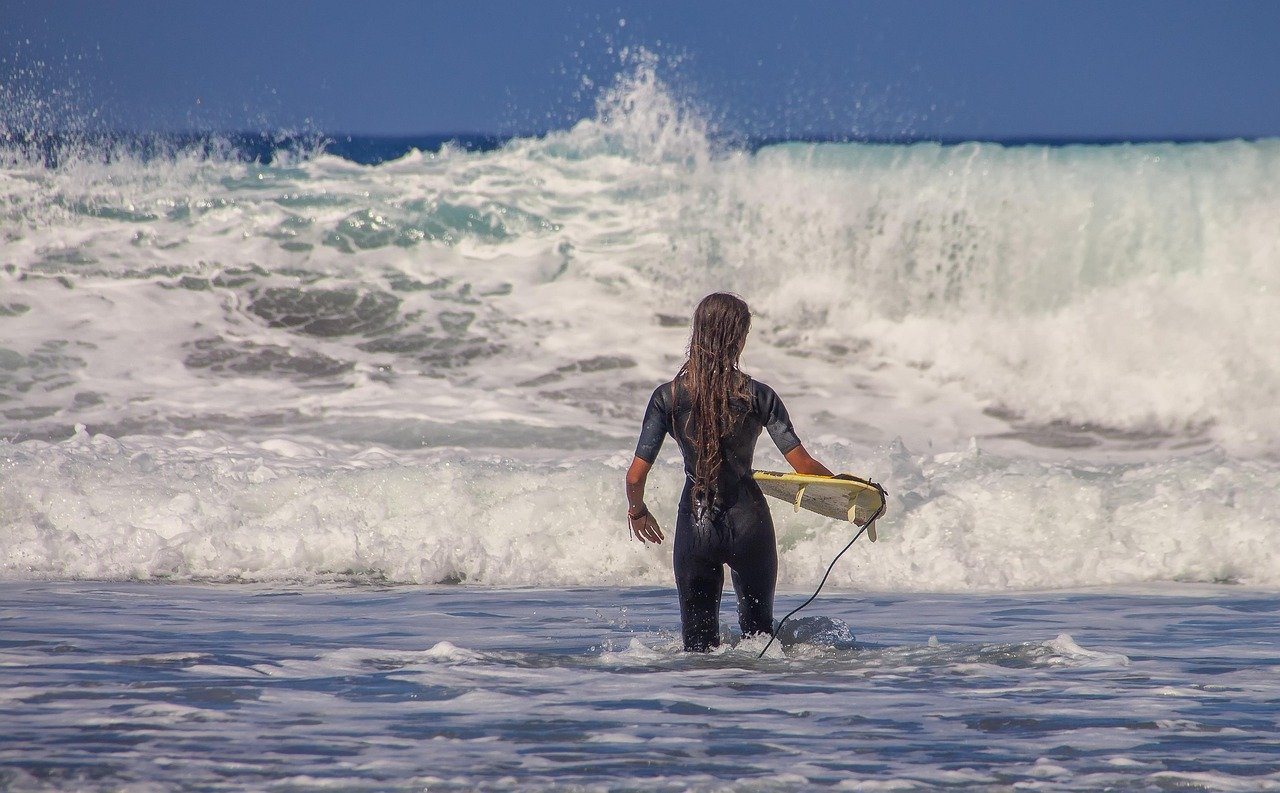
- Leash. A leash keeps the board attached to the surfer, which supports the etiquette point that a loose board is a hazard to others in the water.
- Wax. Applying wax to the deck is a basic part of board care and is done before entering the water.
- Sun protection. Hours on the water leave the skin exposed to sunlight and glare from the surface. See the guide to the best sunscreen for surfing for products and habits that hold up in salt water.
Rinse and dry gear after sessions and store boards out of direct sun. Small habits like these extend the life of equipment and avoid avoidable costs for a hobby that already demands a fair amount of kit.
Contests and where learning leads
Many beginners eventually watch competitions, and the scoring helps them understand what high-level surfers are doing. If you want to follow contests, read how is surfing scored for the basics of judging. Watching skilled surfers choose waves, position themselves and ride with control is also a useful way to see good etiquette in practice.
Frequently asked questions
Is the old rule of a board taller than the surfer still used?
It is an older method. ND Surfboards describes matching a beginner with a surfboard around 2 ft taller than the surfer, and presents the volume rule as the more precise way to choose.
Does age or fitness change the volume rule?
Yes. The volume rules depend on ability, age, fitness and how often a person surfs, so treat the divisors as starting points and adjust with advice from a shop or instructor.
Is it a problem to let go of the board in the water?
It can be. Unity Surf warns that a board that is let go can become a dangerous projectile, so keep hold of it when others are nearby.